
|
Milestone Scientific Inc. (MLSS): PESTLE Analysis [Nov-2025 Updated] |

Fully Editable: Tailor To Your Needs In Excel Or Sheets
Professional Design: Trusted, Industry-Standard Templates
Investor-Approved Valuation Models
MAC/PC Compatible, Fully Unlocked
No Expertise Is Needed; Easy To Follow
Milestone Scientific Inc. (MLSS) Bundle
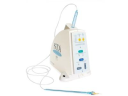
You're looking for a clear-eyed view of Milestone Scientific Inc. (MLSS), and honestly, the PESTLE framework is the right tool to map the near-term landscape. The core takeaway is that their success hinges on navigating complex US and international regulatory hurdles while capitalizing on the shift toward precision-based, less-invasive pain management. If they can increase the installed base for their STA Single Tooth Anesthesia System and CompuFlo Epidural System by just 15% in the next year, the revenue trajectory changes defintely. That's the tightrope walk: regulatory friction versus a massive market opportunity.
Milestone Scientific Inc. (MLSS) - PESTLE Analysis: Political factors
The political landscape in 2025 presents a clear dichotomy for Milestone Scientific Inc.: a significant headwind from escalating global trade tariffs, but a powerful tailwind from US healthcare policy explicitly favoring non-opioid medical devices like the CompuFlo Epidural System.
You need to understand that government action is simultaneously increasing your cost of goods sold and expanding your addressable market. It's a classic squeeze-and-subsidize scenario, so your strategy must focus on capturing the new reimbursement dollars quickly to offset the rising tariff costs.
Shifting FDA and international regulatory approval timelines for new device applications.
The US Food and Drug Administration (FDA) is maintaining its focus on efficiency, but the process for novel devices still requires significant capital and time. For a Class II device like the CompuFlo Epidural System, the 510(k) pathway is the most likely route for new indications or product line extensions. The FDA's goal under the Medical Device User Fee Amendments (MDUFA V) is to reach a decision on 95% of 510(k) submissions within 90 FDA days in the fiscal years 2025-2027.
However, the average total time to a decision for a Pre-market Approval (PMA) for a high-risk device is still around 285 days in this period, and any request for additional clinical data can easily stall a submission for months. Internationally, the European Union's Medical Device Regulation (EU MDR) continues to be a bottleneck, requiring more stringent clinical evidence and longer review times at Notified Bodies, which means foreign market access is still a slow burn. Honestly, regulatory approval is defintely getting faster for straightforward applications, but the complexity of new technology means you still need to budget for a long haul.
US healthcare policy changes impacting reimbursement rates for pain management procedures.
The Centers for Medicare & Medicaid Services (CMS) finalized a 2.83% cut to Medicare physician reimbursements for Interventional Pain Management (IPM) services in the 2025 Medicare Physician Fee Schedule. This is part of a long-term trend, with the estimated 2025 Physician Fee Schedule (PFS) conversion factor dropping to $32.36, a $0.93 or 2.80% decrease from the 2024 level.
This cut pressures hospitals and clinics to reduce supply costs, which could make them hesitant to adopt new, expensive technology. But, to be fair, the Hospital Outpatient Prospective Payment System (HOPD) and Ambulatory Surgical Center (ASC) rates are proposed to update by 2.6% for 2025, which provides some relief for facilities. The real opportunity, though, is the NOPAIN Act, which changes the entire payment calculus for non-opioid devices, as we'll discuss next.
Trade policies and tariffs affecting the cost of manufacturing and distributing medical devices globally.
The US trade policy environment has become a major risk factor in 2025. A new, broad-based duty of 10% on nearly all US imports, including medical devices, became effective on April 5, 2025. Since medical devices were not granted the same tariff exemption as pharmaceutical products, Milestone Scientific is directly exposed to this baseline cost increase.
This is a big deal if your supply chain is global. For example, the total tariff measures for the entire medical device industry could increase from $0.5 billion a year to nearly $63 billion a year, according to some estimates. If your manufacturing or component sourcing relies on China, you face even higher tariffs, which have been levied as high as 145% in response to trade disputes. You must immediately audit your supply chain for exposure to these new tariffs and explore reshoring or nearshoring options to countries compliant with agreements like USMCA to mitigate the impact.
Government emphasis on reducing opioid use driving demand for non-narcotic pain solutions.
This is the clear political win for Milestone Scientific. The Non-Opioids Prevent Addiction in the Nation (NOPAIN) Act, which took full effect in January 2025, is a game-changer.
The law mandates separate Medicare reimbursement for qualifying non-opioid treatments, including devices, used in Ambulatory Surgery Centers (ASCs) and Hospital Outpatient Departments (HOPDs). Before this act, hospitals often chose cheaper opioids because the reimbursement was bundled and didn't differentiate. Now, a device like the CompuFlo Epidural System, which provides a non-narcotic, precision-guided pain solution, is financially incentivized for providers.
The Centers for Medicare & Medicaid Services (CMS) has already identified qualifying non-opioid treatments for separate payment in 2025, which includes both drugs and devices. This policy shift directly supports the adoption of technologies that reduce the estimated 90% of surgical patients who were previously given an opioid prescription. This is a massive market opportunity, and it's backed by federal law.
Here's the quick math on the political climate's dual impact on Milestone Scientific's financial position, which reported a nine-month net loss of approximately $(4.6) million through September 30, 2025:
| Political Factor | Impact on MLSS | Financial Implication (FY 2025) | Actionable Insight |
|---|---|---|---|
| NOPAIN Act (Reimbursement) | Demand Driver | Creates new, separately reimbursable revenue stream for medical devices in ASC/HOPD starting Jan 2025. | Prioritize sales and marketing to ASCs/HOPDs, emphasizing the new reimbursement code. |
| US Tariffs (10% Baseline) | Cost Headwind | Increases cost of imported components and finished goods by at least 10%, eroding gross margin. | Immediately seek US-based component suppliers or explore manufacturing in USMCA-compliant countries. |
| CMS Physician Fee Cut | Adoption Pressure | 2.83% cut to physician reimbursement for IPM services in 2025. | Focus on the device's value proposition (patient safety/precision) to justify its cost despite physician margin pressure. |
Finance: Quantify the expected revenue lift from the NOPAIN Act against the estimated tariff cost increase by Friday.
Milestone Scientific Inc. (MLSS) - PESTLE Analysis: Economic factors
The economic landscape in 2025 presents a clear headwind for capital equipment sales, but Milestone Scientific Inc. (MLSS) is actively mitigating the impact of high interest rates and cautious spending through strategic financing and aggressive reimbursement expansion. You need to focus on how the rising cost of capital directly influences MLSS's R&D budget decisions and how institutional budget constraints translate to slow adoption of the CompuFlo® Epidural System.
High inflation and interest rates increasing the cost of capital for R&D and expansion
The current high-rate environment, with the US Prime Rate sitting at 7.00% as of November 2025, fundamentally increases the cost of any new debt or expansion capital. Even though the Federal Reserve's target range for the federal funds rate is between 3.75% and 4.00%, this still translates to higher hurdles for capital-intensive projects.
This pressure is defintely visible in MLSS's internal decisions. The company strategically delayed non-essential research and development (R&D) projects, causing R&D costs to plummet to just $16,000 in the third quarter of 2025, a sharp drop from $232,000 in the same quarter of 2024. This move protects cash flow but slows the pipeline for new applications of the proprietary Dynamic Pressure Sensing Technology® (DPS).
Here's the quick math on their recent financing:
| Financing Instrument | Amount Secured (2025) | Interest Rate Structure | Effective Rate (Based on 7.00% Prime) |
|---|---|---|---|
| Convertible Notes Payable | $800,000 | Prime minus 2.5% | 4.50% |
To be fair, securing $800,000 in convertible financing from insiders at a favorable rate of 4.50% (Prime minus 2.5%) is a smart, low-cost way to inject capital, but it shows a reliance on internal confidence rather than external, market-rate debt [cite: 2, 10 in previous step].
Hospital and dental clinic budget constraints impacting capital equipment purchasing decisions
The capital equipment market for healthcare remains tight, which directly impacts sales of MLSS's CompuFlo® and STA® Single Tooth Anesthesia System. Hospital administrators generally anticipate only a relatively small increase in their capital equipment budgets for 2025 [cite: 3 in previous step].
The financial strain on healthcare providers is real, with a January 2025 survey projecting tariff-related import expenses could drive up hospital and health system costs by 15% within six months, forcing procurement teams to prioritize only mission-critical purchases [cite: 13 in previous step].
This environment is why the medical segment's revenue for MLSS remains low, with the CompuFlo® Epidural System generating only $41,000 in revenue in Q3 2025 [cite: 2 in previous step]. The company's strategy is a direct response to this constraint:
- Focus on securing Medicare Part B payment rates to shift the purchase justification from a discretionary capital expense to a reimbursable procedure cost.
- Leveraging the Federal Supply Schedule (FSS) contract to bypass typical hospital procurement hurdles and access federal medical facilities.
Currency fluctuations affecting international sales and the cost of imported components
Currency volatility creates significant uncertainty for international sales and margins, especially in Europe. MLSS's international revenue was approximately $863,000 in Q1 2025, showing a decrease of about $67,000 compared to the same period in 2024 [cite: 6 in previous step].
The downturn in international dental sales, particularly due to reduced distributor purchasing in European markets in Q3 2025, highlights this risk [cite: 2 in previous step]. A stronger US Dollar (USD) makes MLSS's products more expensive for foreign distributors who pay in local currency (like the Euro). The USD to Euro (EUR) exchange rate saw significant swings in 2025:
- Strongest USD (Weakest Euro): 1 USD = 0.8424 EUR (September 17, 2025).
- Weakest USD (Strongest Euro): 1 USD = 0.9762 EUR (January 12, 2025).
This volatility of over 13 cents per Euro creates a nightmare for pricing and budgeting for international distributors, causing them to pull back on large, non-essential orders, which is exactly what MLSS experienced in their European dental segment.
Economic uncertainty influencing patient elective procedure volumes and insurance coverage
General economic uncertainty, marked by a rising risk of recession and projected inflation nearing 3.5% for 2025, makes consumers more cautious with discretionary spending [cite: 13 in previous step]. This caution directly impacts patient-driven procedures, which often include dental work and non-emergent pain management where MLSS's products are used.
The data shows a clear trend: a 2024 study on elective surgery practices reported that lead volume dropped by an average of 19% as consumers became more financially conservative [cite: 14 in previous step]. In the dental segment, patient acceptance of complex treatment plans fell below 57% in 2024 for the first time since 2019, suggesting patients are deferring or declining high-cost procedures [cite: 17 in previous step].
MLSS is smartly countering the 'insurance coverage' part of this risk by focusing on reimbursement. They secured favorable Medicare Part B physician payment rates for the CompuFlo® Epidural System (CPT code 0777T) from two key Jurisdictional Medicare Administrative Contractors (JMACs), which now covers providers in 13 states [cite: 1, 16 in previous step]. This shifts the financial burden from the patient or clinic budget to a reliable payer source, making the technology more accessible even in a tight economy.
Milestone Scientific Inc. (MLSS) - PESTLE Analysis: Social factors
The social landscape for Milestone Scientific is highly favorable, driven by a powerful confluence of patient preference for comfort and a heightened awareness of injection risks. Your core market is expanding because patients are demanding better care, and providers are seeking technology to deliver it precisely. This dynamic is directly translating into commercial traction for the company's computer-controlled instruments.
Honestly, the biggest social tailwind is the public's deep-seated aversion to pain and needles, which Milestone Scientific's technology directly addresses. It's a simple value proposition: less pain, less risk, more trust.
Increasing patient demand for pain-free and less-anxiety-inducing dental and medical procedures.
Patient expectations are shifting away from tolerating discomfort toward demanding a pain-free experience, a trend that is fueling the market for advanced delivery systems. In dentistry, fear of pain or discomfort is the top reported reason for dental visit anxiety, a factor that causes more than 1 in 5 adults to avoid necessary dental care altogether.
This anxiety is a significant barrier to care, but it's also a clear opportunity for the STA Single Tooth Anesthesia System (The Wand), which is a computer-controlled local anesthetic delivery (CCLAD) system. The North America dental anesthesia market is projected to grow at a Compound Annual Growth Rate (CAGR) of 6.1% from 2024 to 2031, largely propelled by this demand for minimally invasive and anxiety-free treatments.
Growing public awareness of the risks associated with traditional injection techniques.
Public and professional awareness of the risks tied to traditional, manual injection techniques is growing, especially concerning the potential for nerve injury or misplaced injections in complex procedures like epidurals. Unsafe injection practices, even in a developed healthcare system, carry the risk of transmitting bloodborne pathogens like Hepatitis C virus (HCV) and Hepatitis B virus (HBV), and can lead to bacterial or fungal outbreaks.
This risk profile elevates the value proposition of the CompuFlo Epidural System, which uses proprietary Dynamic Pressure Sensing Technology (DPS) to provide real-time pressure feedback, helping practitioners objectively identify the epidural space. The system is explicitly designed to significantly reduce the risk of complications associated with traditional blind-insertion methods.
Aging US population driving greater need for precise, controlled pain management devices.
The demographic shift toward an aging US population is a critical long-term driver for the precise pain management market. Older individuals are more susceptible to chronic pain conditions, which increases the consumption of pain management therapies. For example, 24.3% of adults in the U.S. report having chronic pain.
This aging cohort requires more frequent and often more complex medical and dental interventions, driving the North America pain management market, which is expected to reach US$ 46.87 billion by 2033, growing at a CAGR of 6.9% from 2025-2033. Milestone Scientific's technology is positioned as a solution for this high-demand, high-risk patient group, offering controlled, non-opioid-aligned pain relief.
| US Pain Management Market Driver | 2025-2033 Projection | Relevance to Milestone Scientific |
|---|---|---|
| North America Pain Management Market Value (2024) | US$ 25.85 billion | Target market for CompuFlo Epidural System. |
| Projected Market Value (2033) | US$ 46.87 billion | Indicates strong long-term growth (6.9% CAGR). |
| Adults with Chronic Pain (US) | 24.3% | High prevalence of the condition driving demand for non-opioid, precise solutions. |
Healthcare professional adoption rates tied to ease-of-use and training availability.
For a new medical device, adoption hinges on clinical confidence, ease-of-use, and clear economic benefits like reimbursement. The company is seeing strong commercial traction for the CompuFlo Epidural System in the private sector, with new rollouts at pain management clinics and ambulatory surgery centers in Q1 2025.
Furthermore, favorable Medicare pricing assignments in multiple states are a key enabler, enhancing market accessibility for the CompuFlo system by securing reimbursement. This financial support de-risks the investment for providers, but the real challenge remains the human capital side. The number of anesthesiology residents applying for pain medicine fellowships dropped 45% between 2019 and 2023, meaning there is a shrinking pool of specialists. This shortage makes technologies that increase procedural safety and efficiency, like Milestone Scientific's, defintely more valuable.
Key adoption enablers in 2025 include:
- Favorable Medicare reimbursement for the CompuFlo system, enabling broader access.
- Growing utilization and recurring revenue from CompuFlo disposables, suggesting repeat use by existing customers.
- Expansion of direct sales programs and digital marketing for the STA Single Tooth Anesthesia System in North America.
Here's the quick math on the company's commercial progress: Milestone Scientific reported revenue of approximately $6.9 million for the nine months ended September 30, 2025, a 5% increase over the same period in 2024, driven by growth in international dental sales and higher recurring medical revenue. Your focus should be on converting this utilization into faster capital equipment sales to accelerate growth.
Milestone Scientific Inc. (MLSS) - PESTLE Analysis: Technological factors
The technological landscape for Milestone Scientific Inc. (MLSS) is defined by the dual challenge of protecting its core patented technology while rapidly digitizing its platforms to meet modern healthcare interoperability standards. The company's future growth hinges on moving its proprietary Dynamic Pressure Sensing Technology® (DPS) from a specialized device to a connected data-generating tool.
Here's the quick math on their internal investment: Milestone Scientific reported Research and Development (R&D) expenses of approximately $420,909 for the nine months ended September 30, 2025. This relatively modest R&D spend, given the competitive market, suggests a focus on incremental updates and commercial strategy, like the 'guided relaunch of CompuFlo®,' rather than a major technological overhaul or new platform development.
Continuous need for software updates and integration with electronic health records (EHRs)
In 2025, the shift toward value-based care makes device data integration with Electronic Health Records (EHRs) a non-negotiable requirement, not a feature. Systems like the CompuFlo Epidural System generate critical, objective, real-time feedback-specifically the pressure data during an injection-that needs to be seamlessly logged into a patient's digital record. Without this integration, the technology creates an administrative bottleneck for hospitals and pain management clinics.
The risk is that a lack of direct, certified EHR integration could slow adoption, especially in large U.S. hospital systems. This is a critical software development priority that must be addressed, as the broader anesthesia machines market is already seeing a major trend toward the integration of digital health technologies.
Competitor innovation in computer-controlled injection and drug delivery systems
Milestone Scientific operates in a technologically dynamic market, facing competition from both specialized Computer-Controlled Local Anesthetic Delivery (CCLAD) rivals and large, diversified medical device companies. The global CCLAD market alone is estimated at $150 million in 2025. Key competitors are not standing still.
The broader electronic drug delivery devices market, which was valued at approximately $64.7 billion in 2024, is seeing rapid advancements, including AI integration and advanced monitoring. For instance, companies like GE Healthcare and Dräger are integrating sophisticated software into their anesthesia workstations for features like automated gas delivery and advanced display/monitoring settings. For MLSS, this means the competitive pressure is not just on the injection mechanism but on the intelligence and connectivity of the entire system.
| Market Segment | Competitor Examples | Key Technological Trend |
|---|---|---|
| Computer-Controlled Local Anesthesia (CCLAD) | Dentsply Sirona, 3M, Quicksleeper® | Enhanced speed control, aspiration capability, and device portability. |
| Broader Electronic Drug Delivery | BD, Medtronic, GE Healthcare | AI-integrated dosing, wearable pumps for high-viscosity biologics, and digital health connectivity. |
Patent protection for their proprietary pressure sensing and delivery technology (e.g., CompuFlo)
The company's core technological strength lies in its proprietary DPS Dynamic Pressure Sensing Technology®. This patented platform is the foundation for both the CompuFlo Epidural System and the STA Single Tooth Anesthesia System. This technology provides objective, real-time pressure feedback, which is a significant clinical advantage in confirming needle placement, especially in epidural procedures.
Maintaining and defending this intellectual property (IP) is defintely crucial. The company has a history of defending its patents, and securing a Notice of Allowance for a U.S. patent related to the CompuFlo disposables in 2021 shows an ongoing effort to protect the recurring revenue stream associated with the consumable components.
Advancements in telemedicine and remote monitoring potentially integrating with device usage data
The post-pandemic environment has solidified telemedicine and remote monitoring as a permanent fixture in healthcare, with the Centers for Medicare & Medicaid Services (CMS) extending certain telehealth flexibilities through September 30, 2025. While Milestone Scientific has not explicitly announced a remote monitoring product, the data generated by the DPS technology-flow rates, pressure readings, and procedure duration-is inherently valuable for remote quality assurance and utilization tracking.
The opportunity here is for MLSS to integrate a secure, cloud-based data logging feature into its devices. This would allow hospital administrators and practice managers to remotely monitor device usage, track procedure success rates, and ensure compliance, which is a key driver for capital equipment purchases in a digital-first world. This move would transform the device from a standalone tool into a connected asset.
Milestone Scientific Inc. (MLSS) - PESTLE Analysis: Legal factors
Strict compliance with HIPAA (Health Insurance Portability and Accountability Act) regarding patient data
Milestone Scientific operates in a highly regulated medical device sector where patient data privacy is a non-negotiable legal factor. While their core products, like the CompuFlo® Epidural System and The Wand® STA System, are drug delivery instruments and not Electronic Health Record (EHR) systems, their adoption by major U.S. healthcare providers creates a critical downstream compliance obligation.
The company's recent success in securing a contract on the Federal Supply Schedule (FSS) in late 2024, which enables procurement by federal facilities like the Veterans Health Administration (VHA) and the Department of Defense (DoD), significantly raises the stakes. These federal entities operate under the most stringent federal data security and privacy rules, including HIPAA (Health Insurance Portability and Accountability Act), which governs the protection of Protected Health Information (PHI).
Milestone Scientific must ensure its devices and any associated software or data transfer mechanisms do not create a compliance risk for its customers, who are the covered entities. The legal risk here shifts from direct PHI handling to ensuring the technology platform is defintely secure and compliant with the technical safeguards of the HIPAA Security Rule.
Ongoing intellectual property (IP) defense against potential infringement on core patents
The company's entire business model is built on its proprietary Dynamic Pressure Sensing (DPS) technology, which is protected by a combination of patents, trademarks, and trade secrets. The constant threat of intellectual property (IP) infringement is a material risk explicitly noted in the company's regulatory filings.
Defending these core patents-which cover the CompuFlo® and STA Single Tooth Anesthesia System®-is a continuous, resource-intensive legal battleground. The cost of filing, prosecuting, and defending patents globally can be prohibitively expensive, especially for a company with a negative cash flow.
Here's the quick math on their current investment in innovation and defense:
| Metric (Nine Months Ended 9/30/2025) | Amount |
|---|---|
| Research and Development (R&D) Expense | $437,000 |
| Selling, General, and Administrative (SG&A) Expense | $9.0 million |
| Net Loss | Approximately $3.9 million (Q1-Q3 2025) |
What this estimate hides is that legal defense costs for a single patent infringement lawsuit can quickly eclipse the entire R&D budget of $437,000 for the first nine months of 2025. The risk is not just the cost of litigation, but the potential for an adverse patent ruling that could force the company to modify its core products or stop selling them entirely.
Product liability risks associated with medical device performance and patient safety outcomes
As a developer and seller of Class II medical devices, Milestone Scientific faces inherent product liability exposure. This risk stems from the potential for device malfunction, design flaws, or inadequate instructions that could lead to patient injury, especially with procedures like epidurals.
The company must adhere to the U.S. Food and Drug Administration (FDA) regulations, including the Medical Device Reporting (MDR) regulation, which requires reporting adverse events. The clinical data for the CompuFlo® Epidural System shows a high success rate, but it also highlights the residual risks inherent in the procedure, even with advanced technology.
- CompuFlo success rate: 96.7% for successful thoracic epidural placement in a clinical study.
- Safety endpoint observation: The study noted two accidental dural punctures in the CompuFlo group, which is the same number as the traditional Loss of Resistance (LOR) control group.
- Adverse events reported: No other adverse events except for hypotension were reported in the CompuFlo group during the study.
The legal risk is that any patient injury, even a rare one, can trigger a costly product liability lawsuit, regardless of the device's FDA clearance or clinical success rate. A single, high-profile case could damage the brand and necessitate a significant financial reserve, which is a strain given the company's reported net loss of approximately $1.15 million in Q3 2025 alone.
International regulatory body approvals (e.g., CE Mark) required for market expansion outside the US
Market expansion outside the U.S. is contingent on securing and maintaining international regulatory approvals. The European Union's CE Mark is crucial for accessing a large portion of the international market.
Milestone Scientific has made strides in this area, which is a positive legal and operational factor. Milestone Medical, Inc. has received CE Mark approval to sell and market both its epidural and intra-articular instruments across the European Union. This approval signifies compliance with the essential health and safety requirements of the European Medical Device Regulation (MDR).
Still, maintaining this status requires continuous monitoring and compliance with evolving EU regulations, which have become more complex under the new MDR framework. Furthermore, the company must pursue separate regulatory approvals in other key international markets, such as China, where they are actively re-establishing their presence, and this process is often slow and unpredictable.
Finance: draft 13-week cash view by Friday to model the impact of a $1 million legal defense contingency.
Milestone Scientific Inc. (MLSS) - PESTLE Analysis: Environmental factors
The environmental landscape for medical device companies like Milestone Scientific Inc. is shifting from a 'nice-to-have' to a core financial risk in 2025. You might think a company with nine-month 2025 revenue of only ~$6.9 million is too small for major ESG scrutiny, but the regulatory and procurement trends are now targeting the product type, not just the size of the manufacturer. Your reliance on single-use components is a clear liability in this new environment.
Increasing regulatory pressure for sustainable manufacturing and reduced device waste.
The global push for a circular economy is creating significant, measurable compliance costs, especially in Europe, which is a key international market for Milestone Scientific. The new EU Regulation 2025/40 on Packaging and Packaging Waste (PPWR) is a game-changer, mandating that all packaging must be recyclable by 2030. While there are temporary exemptions for contact-sensitive plastic packaging until 2035 to preserve sterility, the regulation's financial mechanism, Extended Producer Responsibility (EPR), hits immediately.
This EPR system means you pay higher fees for hard-to-recycle materials-and there is no exception for medical device packaging waste itself. That's a direct, defintely unavoidable cost increase on your supply chain. In the U.S., while the federal government is slower, states like California are leading with rules like the Climate Corporate Data Accountability Act (SB 253), which requires phased reporting of Scope 1, 2, and 3 emissions for companies over $1 billion in annual revenue. While Milestone Scientific is below this threshold, these state-level rules set the national standard for large customers, and the pressure flows downstream.
Managing the disposal and recycling of single-use components and cartridges (e.g., wands).
The single-use model of your CompuFlo and CompuDent wands and cartridges is directly in the crosshairs of the new sustainability movement. Medical devices are a significant contributor to the healthcare sector's carbon footprint, with single-use products accounting for up to 94% of device-related emissions during production. Europe's healthcare sector generates an estimated 1 million tonnes of single-use plastics, and the industry is being pushed to cut this volume by over 50%.
The problem is twofold: the material cost and the disposal cost. Your customers-hospitals and dental practices-are facing their own waste reduction targets and are starting to prefer reusable alternatives, even if the upfront cost is higher. This means your recurring revenue from disposables, which is critical to your business model, is under threat from procurement teams now using ESG metrics as a key performance indicator (KPI).
Energy consumption of manufacturing facilities and the supply chain's carbon footprint.
Measuring and reducing Scope 1 (direct), Scope 2 (energy-related), and Scope 3 (supply chain) emissions is no longer optional; it is a prerequisite for major contracts. The U.S. healthcare sector is responsible for approximately 8.5% of national carbon emissions, and the supply chain accounts for the majority of this footprint. Your manufacturing and logistics partners are already facing pressure to decarbonize, which translates to higher costs for you if you don't demand greener practices.
Here's the quick math on the industry's exposure:
| Metric | 2025 Industry Data Point | Implication for MLSS (Single-Use Model) |
|---|---|---|
| Healthcare Sector GHG Emissions | 5% to 10% of national emissions | Highlights the sector's high-profile environmental target. |
| Medical Device Contribution | Estimated 25% of healthcare-related carbon emissions | Confirms devices are a major focus area for reduction. |
| Single-Use Device Emissions | Up to 94% of device-related production emissions | Directly quantifies the risk of the CompuFlo/CompuDent single-use model. |
| EU Packaging Waste Target | All packaging must be recyclable by 2030 | Forces a product redesign or packaging material change within five years. |
Investor and public scrutiny over environmental, social, and governance (ESG) reporting.
Investor scrutiny is getting sharper, and it's moving beyond just the mega-caps. The lack of a public, detailed ESG report from Milestone Scientific Inc. is a red flag, especially when compared to industry peers. This isn't just about public relations; it's about access to capital and securing sales.
The most immediate threat is procurement-driven risk:
- Procurement teams at major hospital networks now include ESG criteria in their purchasing, with 70% of customers using these metrics.
- One major U.S. hospital network canceled over $3.8 billion in long-term supply contracts in 2023 due to supplier ESG misalignment.
When your nine-month net loss is approximately $(4.6) million, you can't afford to be locked out of a major contract over a lack of a clear disposal strategy for your wands. You need a verifiable, end-of-life solution for your disposables now, not in 2030.
Next Step: Operations and R&D must partner to draft a formal, costed 'Wand/Cartridge Take-Back and Recycling Feasibility Study' by the end of Q1 2026, including a third-party partner for waste processing.
Disclaimer
All information, articles, and product details provided on this website are for general informational and educational purposes only. We do not claim any ownership over, nor do we intend to infringe upon, any trademarks, copyrights, logos, brand names, or other intellectual property mentioned or depicted on this site. Such intellectual property remains the property of its respective owners, and any references here are made solely for identification or informational purposes, without implying any affiliation, endorsement, or partnership.
We make no representations or warranties, express or implied, regarding the accuracy, completeness, or suitability of any content or products presented. Nothing on this website should be construed as legal, tax, investment, financial, medical, or other professional advice. In addition, no part of this site—including articles or product references—constitutes a solicitation, recommendation, endorsement, advertisement, or offer to buy or sell any securities, franchises, or other financial instruments, particularly in jurisdictions where such activity would be unlawful.
All content is of a general nature and may not address the specific circumstances of any individual or entity. It is not a substitute for professional advice or services. Any actions you take based on the information provided here are strictly at your own risk. You accept full responsibility for any decisions or outcomes arising from your use of this website and agree to release us from any liability in connection with your use of, or reliance upon, the content or products found herein.