
|
Permian Basin Royalty Trust (PBT): SWOT Analysis [Nov-2025 Updated] |

Fully Editable: Tailor To Your Needs In Excel Or Sheets
Professional Design: Trusted, Industry-Standard Templates
Investor-Approved Valuation Models
MAC/PC Compatible, Fully Unlocked
No Expertise Is Needed; Easy To Follow
Permian Basin Royalty Trust (PBT) Bundle
You're holding Permian Basin Royalty Trust (PBT) because you want pure, unhedged exposure to Texas oil and gas, but the recent volatility is a real concern. As a passive royalty trust, PBT offers a high payout-its payout ratio hit 99.4% in 2025-but that income stream is fragile, as shown by the November 2025 distribution of just $0.019233 per unit, which excluded the Waddell Ranch properties entirely due to excess costs. This is not a growth stock; it's a distribution machine with a fixed clock, so understanding the Strengths, Weaknesses, Opportunities, and Threats (SWOT) is crucial to seeing past the monthly swings and evaluating this unique 75% to 95% net overriding royalty interest play.
Permian Basin Royalty Trust (PBT) - SWOT Analysis: Strengths
Pure-play exposure to Permian Basin oil and gas prices.
The Permian Basin Royalty Trust provides investors with a direct, unhedged financial stake in one of the most prolific oil and gas regions in the world: the Permian Basin in West Texas. This is a pure-play strength; your returns are a direct function of commodity prices without the distraction of global, non-Permian operational issues.
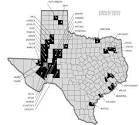
The Trust's principal assets are a 75% net overriding royalty interest (NPI) in the Waddell Ranch properties and a 95% net overriding royalty interest in the Texas Royalty properties, all located in Texas. This structure means the Trust's performance is tightly correlated with the realized prices for West Texas Intermediate (WTI) crude and natural gas in the region. For example, during the second quarter of 2024, the Texas Royalty properties realized an average oil price of $78.00 per barrel and gas (including natural gas liquids or NGLs) at $10.04 per thousand cubic feet (Mcf), directly boosting royalty income.
This focus offers a clear investment thesis: bet on the Permian Basin's long-term production and price stability. It's a simple bet.
High, consistent cash distributions tied directly to commodity sales.
The Trust's core purpose is to distribute nearly all available income to unitholders on a monthly basis, offering a high-yield investment vehicle. The distribution is a direct pass-through of net royalty proceeds, which can lead to significant payouts during periods of high commodity prices and stable production.
In the 2024 fiscal year, the total income distributed to unitholders was $25,415,368, equating to a total distribution of approximately $0.55 per Unit. The forward annual payout is estimated at around $0.23 per unit, reflecting the direct, monthly flow of cash. For the trailing twelve months (TTM) as of late 2025, the Trust distributed 89.52% of its total income to unitholders.
| Metric | Value (2024 Fiscal Year) | Source of Strength |
|---|---|---|
| Total Income Distributed | $25,415,368 | High Payout |
| Distribution Per Unit (2024 Total) | $0.55 | Significant Yield Potential |
| Percentage of TTM Income Distributed (Late 2025) | 89.52% | Minimal Internal Retention |
No capital expenditure (CapEx) or operating cost risk for unitholders.
As a royalty trust, Permian Basin Royalty Trust does not own or operate the underlying properties; it only owns the royalty interest. This is a critical strength because it shields unitholders from the massive capital expenditure (CapEx) and operational risks inherent to the oil and gas exploration and production (E&P) business.
The Trust itself has a CapEx of $0. Its only direct expenses are minimal general and administrative (G&A) costs, which amounted to only 10.48% of total income in the trailing twelve months leading up to late 2025. This structure assures profitability for the Trust as an entity.
However, it's important to note the Waddell Ranch properties are a net profit interest (NPI). This means the operator, Blackbeard Operating, deducts its own CapEx and operating costs before calculating the Trust's 75% share. While you don't pay the CapEx directly, the operator's spending-which was approximately $109.4 million (gross) in CapEx and $82.2 million in lease operating expenses and property taxes in 2024-does reduce the royalty income received by the Trust. The unitholder's liability is zero, but the distribution is variable.
Simple, transparent business model; easy to understand the cash flow.
The Trust operates on a straightforward model that is easy for any financially-literate decision-maker to grasp. The Trustee, Argent Trust Company, has a clearly defined, minimal function: collect the net royalty proceeds, deduct the Trust's minor administrative expenses, and distribute the remainder.
This simplicity is an advantage over complex E&P companies with opaque hedging strategies, exploration budgets, and debt structures. The cash flow is a direct function of three variables: production volume, realized commodity prices, and the operator's deductible costs.
- Collect royalty income.
- Pay Trust's G&A expenses.
- Distribute the rest monthly.
It is a toll-road model for energy. The only current complexity is the ongoing litigation with Blackbeard Operating over expense reporting, but the underlying model remains fundamentally simple.
Favorable tax treatment as a pass-through entity for income.
For US federal income tax purposes, the Permian Basin Royalty Trust is classified as a grantor trust. This pass-through status is a significant financial benefit for unitholders.
The Trust itself reports a Total Tax Payable of $0.00 million as of the second quarter of 2025, confirming its status. Each unitholder is treated as a direct owner of a pro rata share of the Trust's income and expenses. This structure has two key advantages:
- Avoids corporate-level taxation, eliminating the potential for double taxation.
- Entitles unitholders to claim depletion deductions (either cost depletion or, under certain circumstances, percentage depletion) on their federal income taxes, which can reduce the taxable portion of the distribution.
You defintely need to consult your own tax advisor, but this structure provides a significant tax-efficiency advantage over a standard C-Corp dividend.
Permian Basin Royalty Trust (PBT) - SWOT Analysis: Weaknesses
Finite Asset Life; The Trust is Set to Terminate When Reserves Deplete
The core weakness of Permian Basin Royalty Trust (PBT) is its finite lifespan, which is structurally baked into the royalty trust model. You are investing in a depleting asset base with a clear, though often extended, expiration date. Based on current reported reserves and production, the estimated production index for the underlying properties is approximately 15 years as of early 2025. This is a crucial number to keep in mind, as it represents the theoretical limit of the trust's income stream. What this estimate hides is the risk that the operator, Blackbeard Operating, LLC, has refused to provide a development plan for 2025, which forced the Trust to exclude all proved undeveloped reserves (PUDs) from its 2024 reserve estimates. To be fair, PUDs constituted 38% of the Trust's total proved reserves in 2023, so their exclusion creates a significant, immediate reduction in reported asset life.
Zero Organic Growth Potential; No Ability to Acquire New Reserves or Drill
As a royalty trust, PBT is a passive investment vehicle, functioning purely as a pass-through entity for royalty income. The trust's assets are static, meaning the Trustee has no authority to acquire new oil and gas properties, drill new wells, or reinvest earnings to expand the reserve base. This structural limitation means there is zero organic growth potential-the only way for the value per unit to increase is through higher commodity prices or unexpected increases in production from the existing wells. This is not a growth stock; it's a liquidation play. The operator, Blackbeard Operating, LLC, controls all drilling and development decisions, and the Trust's role is simply to collect its net overriding royalty interest (ORRI).
Distributions Are Highly Volatile, Swinging with Oil and Gas Prices
The income stream you receive is directly and immediately exposed to the brutal volatility of the energy markets. Since the Trust passes essentially all net royalty income to unitholders, any swing in oil and gas prices translates directly into distribution cuts or bumps. For a concrete example, the distributable income per unit fell from $0.60 in fiscal year 2023 to $0.55 in 2024. The monthly distribution per unit plummeted from $0.53 in early 2021 to a mere $0.0196 in April 2025. The November 2025 distribution was even lower at $0.019233 per unit, a reduction attributed to lower natural gas volumes and a downturn in oil and gas prices. This is not a reliable income vehicle.
Here's the quick math on how price swings impact the Trust, using 2025 data:
| Property | Period | Average Realized Oil Price | Year-over-Year Price Change |
|---|---|---|---|
| Texas Royalty Properties | 9 months ending Sept 30, 2024 | $77.40 per barrel | N/A |
| Texas Royalty Properties | 9 months ending Sept 30, 2025 | $67.66 per barrel | Decrease of 12.6% |
| Waddell Ranch Properties | 8 months ending Aug 31, 2024 | $76.62 per barrel | N/A |
| Waddell Ranch Properties | 8 months ending Aug 31, 2025 | $66.68 per barrel | Decrease of 12.9% |
This drop in realized prices is a primary driver behind the massive losses at the Waddell Ranch properties, which generated losses of $10.862 million in Q1 2025, $6.713 million in Q2 2025, and $6.405 million in Q3 2025. This cost surplus means Waddell Ranch, which accounts for over 95% of consolidated gross proceeds, contributed no royalty income from November 2024 through September 2025.
Production Decline Is Inevitable Over Time as Wells Mature
The underlying oil and gas wells are a finite resource, and their production will naturally decline over time. This is a fundamental reality of the energy business. For PBT, this decline is already visible in the financials. Oil production from the underlying properties decreased by approximately 3% from 2023 to 2024. This decline rate will likely accelerate as the wells age, directly reducing the royalty income base. The Texas Royalty Properties, currently the only reliable income source, are mature assets. The Waddell Ranch properties, while having higher production potential, are currently in a net cost position, effectively acting as a drag on distributable cash flow rather than a source of growth.
Trust Structure Limits Management's Ability to Adapt to Market Changes
The Indenture that governs the Trust severely limits the Trustee's (Argent Trust Company) function to collecting income, paying expenses, and distributing the remainder. This lack of operational control is a major vulnerability, especially when facing a difficult operator like Blackbeard Operating, LLC. The operator dictates all operational and capital expenditure decisions, which directly affect the Trust's net profits.
The current legal battle with Blackbeard, where the Trust is seeking $25 million in damages for alleged improper deductions, perfectly illustrates this lack of control. This dispute has led to a critical lack of transparency, as Blackbeard has:
- Refused to provide the Trustee with information on future development plans for 2025.
- Withheld monthly net profits interest reports since 2023.
- Forced the Trust to rely on quarterly data, creating a one-month lag in Waddell Ranch proceeds for distributions.
The Trustee cannot simply fire the operator or change the business plan in response to low oil prices or high costs. It's a passive position, defintely amplifying risk.
Permian Basin Royalty Trust (PBT) - SWOT Analysis: Opportunities
You hold units in Permian Basin Royalty Trust, so you know its distributions are a direct function of commodity prices and production volume. The near-term outlook, especially through the 2025 fiscal year, presents clear opportunities tied to market pricing and Texas regulatory shifts. We're seeing a setup where even a modest price surprise or a strategic tax move can significantly boost your net profit interest (NPI) income.
Sustained high crude oil prices, especially West Texas Intermediate (WTI)
The core opportunity for the Trust is simply a higher oil price environment. WTI crude oil price forecasts for the full 2025 fiscal year remain robust, with projections from major institutions averaging between $62.00 and $65.40 per barrel. This is the engine of the Trust's revenue, and this price band provides a solid foundation for consistent distributions.
For context, the oil revenue that fed the November 2025 distribution-reflecting August production-was based on an average oil price of $63.38 per barrel for the Texas Royalty Properties. If WTI prices hold or even edge toward the higher end of the forecast, say $65.15 per barrel (the EIA's 2025 average forecast), that differential flows almost directly to the Trust's bottom line. The Trust's structure means more revenue with no corresponding rise in administrative costs. It's pure margin expansion.
Increased drilling efficiency and production rates from the underlying operator
While the Trust itself is a passive entity, its distributions rely entirely on the efficiency and investment of the underlying operators. The opportunity here is for the operator of the Texas Royalty Properties to continue implementing modern drilling and completion techniques common in the Permian Basin, which drives more production from the existing resource base.
The Texas Royalty Properties, which contribute 95% of the NPI to the Trust, produced 14,356 barrels of oil and 9,425 Mcf of gas for the period reflected in the November 2025 payout. Any successful workovers or new drilling that increases these allocated volumes-even slightly-translates into a direct, monthly increase in your distribution. The Waddell Ranch properties, currently in an excess cost position, would also benefit immensely from a production surge that quickly clears that cost hurdle.
Lower operating and severance tax rates in Texas could boost net revenue
Texas is actively using tax incentives to encourage production, which creates a clear opportunity to increase the Trust's net revenue. The baseline Texas severance tax for oil is 4.6% of market value and for gas is 7.5% of market value. However, new legislation provides a path to lower the effective tax burden.
Specifically, a new severance tax exemption for certain restimulated wells takes effect on January 1, 2026. This incentive offers up to 36 months of tax relief or until $750,000 of restimulation costs are recovered in tax savings. Given the age of some of the Trust's underlying properties, the operator has a clear incentive to use this program. If the operator qualifies just one well, that tax saving immediately reduces the $137,663 in taxes and expenses that were deducted from the Texas Royalty Properties' October revenue.
Potential for a favorable final sale of remaining assets before termination
As a royalty trust, Permian Basin Royalty Trust has a finite life, and the eventual disposition of its assets is a key factor. The opportunity lies in the current high valuation of Permian Basin assets. The Waddell Ranch properties, in particular, hold a 75% net overriding royalty interest. A favorable sale of these remaining assets, or a strategic corporate action, could unlock significant value for unitholders.
The announcement of a Special Meeting called by SoftVest for December 16, 2025, is a sign that corporate action is being actively pursued by a major unitholder. This could force a strategic review or a monetization event that crystallizes the value of the royalty interests at a premium, especially if the Waddell properties' excess cost position is cleared or if the buyer is able to leverage the new tax incentives to maximize future cash flow.
Stronger-than-expected recovery in natural gas liquids (NGL) pricing
Don't just watch the WTI price; NGLs are a significant, often overlooked, component of the Trust's revenue. The average gas price of $7.10 per Mcf for the Texas Royalty Properties (reflecting July production) explicitly 'includes significant NGL pricing'.
The NGL market is showing signs of resilience and growth. Here's the quick math: the C3+ NGL forward strip has increased 4% year-to-date in 2025, which is notably outperforming the WTI forward strip's 5% decline over the same period. This strength is driven by rising global demand, with U.S. propane exports expected to grow approximately 9% in 2025. This NGL tailwind could push the realized price for the Trust's gas production higher than general Henry Hub forecasts, providing a welcome boost to monthly distributions.
Here's what the NGL market strength means for the Trust:
- U.S. NGL production forecast for 2025 was raised by 1.0% to 7.39 million barrels per day (MMBpd).
- The global Natural Gas Liquid Market is projected to grow to $59.09 billion in 2025.
The Trust is defintely positioned to benefit from this global demand surge.
Permian Basin Royalty Trust (PBT) - SWOT Analysis: Threats
Steep decline in oil or natural gas prices, directly cutting distributions.
The most immediate threat to your monthly distribution is the volatility in commodity prices, especially crude oil, which accounts for the vast majority of Permian Basin Royalty Trust's (PBT) revenue. We saw this play out in 2025: the average realized oil price for the Texas Royalty properties for the nine months ending September 30, 2025, was $67.66 per barrel. That represents a significant 12.6% decrease compared to the same period in the prior year. Lower prices directly translate to smaller net profits for the underlying operator, which means a smaller check for the Trust and, ultimately, for you.
For the Waddell Ranch properties, the average realized oil price for the period from December 2024 to August 2025 was $66.68 per barrel, a 12.9% decrease year-over-year. Natural gas prices also saw pressure, with the average realized price for the Texas Royalty Properties at $7.10 per Mcf (including natural gas liquids pricing) for the August/July 2025 production period. Lower prices mean the operator has a harder time covering their costs, putting the Net Profits Interest (NPI) at risk.
Accelerated production decline from the underlying royalty properties.
Royalty trusts are a wasting asset, and the production decline rate is a non-negotiable risk. The most alarming signal in 2025 is the continued failure of the Waddell Ranch properties to contribute to the distribution. This is not just a price issue; it points to a fundamental decline or cost problem that is accelerating. The Waddell Ranch properties have been in an 'excess cost position,' resulting in zero proceeds being included in the November 2025 distribution.
The NPI deficit at Waddell Ranch is a clear indicator of this threat:
- Q1 2025 NPI Deficit: $10.862 million
- Q2 2025 NPI Deficit: $6.713 million
- Q3 2025 NPI Deficit: $6.405 million
The operator must recover this multi-million dollar deficit before the Trust sees another penny from this major asset. That's a deep hole to climb out of, and the Texas Royalty Properties, while contributing, also saw lower natural gas volumes impacting the November 2025 payment.
Adverse regulatory changes affecting drilling or environmental compliance.
Regulatory risk is no longer a distant possibility; it's a current-year cost driver. The Railroad Commission of Texas (RRC) implemented new guidelines for saltwater disposal well (SWD) permits, effective June 1, 2025, in response to increased seismic activity in the Permian Basin. This is a direct operational cost threat. The new rules double the Area of Review (AOR) from a quarter-mile to a half-mile around injection sites, plus they impose new limits on injection pressure and volume. Industry analysts project these new wastewater regulations will increase costs for Permian oil producers by 20-30% due to stricter compliance.
Also, the federal Waste Emissions Charge (WEC) on methane, established by the Inflation Reduction Act, is a clear financial headwind. The charge for wasteful methane emissions is set to rise to $1,200 per metric ton in 2025, up from $900 in 2024. Even if the operator is efficient, this charge adds a structural cost that reduces the net profit. Regulatory compliance is defintely getting more expensive.
Increased operational costs or taxes borne by the underlying operator.
The Net Profits Interest structure means PBT unitholders bear a proportional share of the operator's costs, and those costs are rising sharply. The continuous excess cost position at the Waddell Ranch properties is explicitly due to rising operational expenses. The Q3 2025 report cites the deficit being driven by a combination of factors:
- Increased taxes
- Gathering and transportation costs
- Operating expenses
- Capital expenditures
Here's the quick math on the Texas Royalty properties for the August/July 2025 period: the total taxes and expenses deducted from the revenues were $137,663 on revenues of $1.1 million, before the Trust's administrative expenses. Any increase in local property taxes, severance taxes, or the cost of labor and materials in the Permian Basin will immediately erode your distribution, even if oil prices hold steady.
Shift to renewable energy reducing long-term demand for fossil fuels.
While the Permian Basin remains the engine of U.S. oil production, the long-term capital shift toward the energy transition is a macro threat. Global energy sector investment is projected to hit a record $3.3 trillion in 2025, with clean technologies accounting for two-thirds of that total. This massive allocation of capital away from fossil fuels signals a structural, secular decline in long-term demand and investor appetite for pure-play oil and gas assets like PBT.
Near-term, the demand for natural gas is already moderating; global gas demand growth is forecast to slow significantly from 2.8% in 2024 to around 1.3% in 2025. The risk is that as the energy transition accelerates, the terminal value of the underlying royalty properties decreases faster than anticipated. You need to factor in a higher discount rate for the long-term cash flow, reflecting the increasing technological and political risk of a stranded asset.
What this estimate hides is the specific impact of the operator's decisions, which PBT unitholders can't control. If the operator slows down drilling or redirects capital elsewhere, PBT's revenue suffers, defintely. Your next step should be to track the operator's latest drilling plans for the underlying properties. Finance: Check the operator's Q3 2025 presentation for Permian activity by Friday.
Disclaimer
All information, articles, and product details provided on this website are for general informational and educational purposes only. We do not claim any ownership over, nor do we intend to infringe upon, any trademarks, copyrights, logos, brand names, or other intellectual property mentioned or depicted on this site. Such intellectual property remains the property of its respective owners, and any references here are made solely for identification or informational purposes, without implying any affiliation, endorsement, or partnership.
We make no representations or warranties, express or implied, regarding the accuracy, completeness, or suitability of any content or products presented. Nothing on this website should be construed as legal, tax, investment, financial, medical, or other professional advice. In addition, no part of this site—including articles or product references—constitutes a solicitation, recommendation, endorsement, advertisement, or offer to buy or sell any securities, franchises, or other financial instruments, particularly in jurisdictions where such activity would be unlawful.
All content is of a general nature and may not address the specific circumstances of any individual or entity. It is not a substitute for professional advice or services. Any actions you take based on the information provided here are strictly at your own risk. You accept full responsibility for any decisions or outcomes arising from your use of this website and agree to release us from any liability in connection with your use of, or reliance upon, the content or products found herein.