
Permian Basin Royalty Trust (PBT) Bundle
You're looking at Permian Basin Royalty Trust (PBT) because you see a pure-play income vehicle, but the latest financial health check shows some serious pressure points you need to map to your investment thesis. The headline is that the November 2025 cash distribution is a modest $0.019233 per unit, which translates to a total payout of only $896,437, and that's a direct consequence of lower commodity prices and production volume from the Texas Royalty Properties, where the net profit for October was just $973,969. Crucially, the Waddell Ranch properties-the Trust's largest asset-are still stuck in a deep excess cost position, posting a $6.405 million loss for Q3 2025 alone, meaning zero proceeds are flowing to unitholders from that side. Honestly, when your Q3 distributable income is down to $6.86 million (or $0.15 per unit) and the average oil price is hovering around $63.38 per barrel, you defintely need to understand the path to recovery before you commit capital.
Revenue Analysis
You're looking at Permian Basin Royalty Trust (PBT) and wondering where the cash is coming from, especially with the volatile energy market. The direct takeaway is this: PBT's revenue is 100% dependent on commodity prices and production from its two royalty interests, and the near-term picture is defined by a sharp revenue contraction in 2025 due to a major asset being in a loss position.
The Trust's revenue streams are not from selling a product or service, but from its Net Overriding Royalty Interests (NORI)-essentially a cut of the gross proceeds from oil and gas production on the underlying properties before operating costs are deducted, but after certain taxes. It's a pure-play bet on commodity prices and well performance.
- Waddell Ranch Properties: A 75% net overriding royalty interest (NORI).
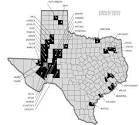
- Texas Royalty Properties: A 95% net overriding royalty interest (NORI).
This structure means the revenue is highly sensitive to the price of crude oil, which accounted for a dominant 91.2% of total gross proceeds in the three months ended September 30, 2025.
The year-over-year revenue trend for 2025 shows serious contraction. For the quarter ending June 30, 2025, PBT reported revenue of $3.11 million, which is a steep decline of 64.84% compared to the same quarter last year. Here's the quick math on the first half: Q1 2025 revenue was $3.07 million, down approximately 49.17% from the $6.04 million reported in Q1 2024. This decline is directly tied to lower realized prices; the average realized oil price for the Texas Royalty properties for the nine months ending September 30, 2025, was $67.66 per barrel, a 12.6% decrease from the prior year's period.
The major shift in revenue contribution is the Waddell Ranch properties-historically responsible for over 95% of consolidated gross proceeds-moving into an 'excess cost' position. This is a crucial change. For the three months ended September 30, 2025, the Waddell Ranch properties incurred a loss of $6.405 million, which means they are not contributing any distributable income. This leaves the smaller Texas Royalty properties as the sole source of cash distributions for the Trust. For October 2025, the Texas Royalty Properties generated $1,111,632 in gross revenues, resulting in a net contribution of $925,270 to the distribution. That's a significant concentration of risk on the smaller asset base.
To be fair, the Q3 2025 quarterly revenue was $7.27 million, but that figure hides the Waddell Ranch deficit, which must be recovered before that asset contributes again. This investment is defintely a story of two assets: one is carrying the load, and the other is a drag, awaiting a sustained oil price above the estimated $70 per barrel breakeven to start generating net profit again.
For a deeper dive into the valuation implications of this revenue shift, you can read our full post: Breaking Down Permian Basin Royalty Trust (PBT) Financial Health: Key Insights for Investors.
| Revenue Metric | Value (2025 Fiscal Data) | YoY Change / Context |
|---|---|---|
| Q3 2025 Quarterly Revenue | $7.27 million | Reported November 13, 2025 |
| Q1 2025 Quarterly Revenue | $3.07 million | Down 49.17% from Q1 2024 |
| TTM Revenue (Ending Jun 30, 2025) | $18.41 million | Down 43.61% YoY |
| Waddell Ranch Q3 2025 Loss | $6.405 million | Not contributing to distributions |
| Texas Royalty Properties Gross Revenue (Oct 2025) | $1,111,632 | Sole source of current distributions |
Profitability Metrics
You're looking at Permian Basin Royalty Trust (PBT) because those high-margin royalty models look like a toll road on the energy highway. That's a fair assessment. The structure of a royalty trust, where PBT collects revenue without incurring exploration or production costs, naturally leads to industry-leading gross margins. The real story, however, is in the operational efficiency and the near-term volatility, which is why your net profit margin is sitting at 89.52% for the Trailing Twelve Months (TTM) ended June 30, 2025.
Here's the quick math on profitability for the TTM period ending June 30, 2025. Since PBT is a pass-through entity with no Cost of Goods Sold (COGS), its gross profit is identical to its revenue. The only significant deduction is General and Administrative (G&A) expenses, which are minimal-just $1.93 million for the period.
| Profitability Metric (TTM Ended Jun 30, 2025) | Amount (Millions USD) | Margin |
|---|---|---|
| Revenue / Gross Profit | $18.41M | 100% |
| Operating Expenses (G&A) | $1.93M | 10.48% |
| Operating Income / Net Income | $16.48M | 89.52% |
A nearly 90% operating and net profit margin is defintely exceptional, but it hides a critical near-term risk. The Trust's profitability is entirely dependent on the underlying oil and gas prices remaining high enough to cover the operating costs of the working interest owners. When prices dip, the high-margin model can break down fast.
The Volatility in Trend and Operational Efficiency
The trend in PBT's profitability shows significant vulnerability to the commodity cycle. For the TTM ending June 30, 2025, revenue was $18.41 million, which is a sharp decline of -43.61% from the prior fiscal year. Net income saw a similar drop of -47.53%. This is not a structural failure of the royalty model itself, but a direct consequence of the operational mechanics.
The core issue is cost management, or rather, the lack of a net profit (NPI) contribution from the Waddell Ranch properties, which typically account for over 95% of the Trust's gross proceeds.
- Waddell Ranch entered an excess cost position in late 2024.
- This means the operator's production costs exceeded gross proceeds.
- As a result, the Waddell Ranch properties contributed no royalty income to the Trust from November 2024 through September 2025.
- The Trust's distributions during this period were solely from the much smaller Texas Royalty Properties.
This excess cost situation is the single most important factor driving the recent decline, and it requires oil prices to climb back to at least $70 per barrel to generate a net profit and restart royalty payments from Waddell Ranch.
Comparing PBT to Industry Peers
When you compare PBT's profitability ratios to its peers in the Oil & Gas Royalty Trust space, you see a wide range, reflecting the different underlying assets and royalty structures. PBT's TTM Net Margin of 89.52% places it at the high end, but not the highest, among trusts that are currently generating a profit.
- Sabine Royalty Trust (SBR): Reported a Q3 2025 Net Margin of approximately 96.38%. SBR is the gold standard for pure royalty trusts with minimal expenses.
- Cross Timbers Royalty Trust (CRT): Showed a Q3 2025 Net Margin of 84.24%. This is lower than PBT, often due to a slightly different mix of royalty and working interests.
- Permianville Royalty Trust (PVL): Reported a much lower Q3 2025 Net Margin of 5.79%. This highlights the extreme volatility and cost challenges some trusts face, which can include suspending distributions entirely when costs outweigh proceeds.
PBT's high margin is a function of its structure, but its recent performance shows it is not immune to the price and cost pressures that plague its peers. You need to monitor the Waddell Ranch NPI deficit recovery closely. For more on the long-term view, check out our analysis on Mission Statement, Vision, & Core Values of Permian Basin Royalty Trust (PBT).
Debt vs. Equity Structure
You need to know how Permian Basin Royalty Trust (PBT) funds its operations, and the short answer is: it doesn't use debt. This Trust is a pure pass-through vehicle, not an operating company like ExxonMobil or Chevron, so its capital structure is exceptionally clean-it's essentially debt-free. This structure is a major distinction for investors, translating directly into lower risk but also limiting growth potential, as the Trust cannot take on debt to acquire new assets.
Honestly, the balance sheet for Permian Basin Royalty Trust is one of the simplest you will find in the energy sector. As of the most recent quarter in 2025, the Trust reports $0.00 in total debt, encompassing both long-term and short-term debt. This is a deliberate design choice, not a temporary financial state. The Trust's total shareholder equity is approximately $163.1K.
Here's the quick math: with zero debt and a small equity base, the Debt-to-Equity (D/E) ratio is a clean 0.00.
- Total Debt (2025 MRQ): $0.00
- Debt-to-Equity Ratio: 0.00
- Financing Method: 100% Equity and Royalty Income
To be fair, a D/E ratio of 0.00 is the gold standard for financial stability. When you compare this to the broader 'Oil and Gas - Royalty Trust - United States' industry, the average D/E ratio is also 0.00, confirming PBT is perfectly aligned with its peers. However, this contrasts sharply with the average D/E ratio of an upstream Exploration and Production (E&P) company, which can easily be around 0.50 or higher, reflecting their need for massive capital investment in drilling and infrastructure.
Because the Trust is a passive entity-it just collects and distributes royalties from the underlying properties-it does not issue corporate bonds, seek credit ratings for debt, or engage in refinancing activity. The only rating you'll see is for the units of beneficial interest, which Weiss Ratings reiterated as a 'Hold (C-)' in October 2025. The Trust's financing is entirely equity-funded through the original issuance of units, plus the retained earnings that make up the equity. They simply pass through the net profits to unitholders, which you can learn more about in the Mission Statement, Vision, & Core Values of Permian Basin Royalty Trust (PBT).
The key takeaway for you is that PBT carries zero solvency risk from debt, but its growth is constrained entirely by the production and commodity prices of its existing, static asset base. You won't see a debt-fueled expansion here. The focus should be on the stability of the royalty stream, not the balance sheet leverage.
Liquidity and Solvency
You need to know if Permian Basin Royalty Trust (PBT) can cover its near-term obligations, and the quick answer is yes, but the deeper solvency picture is more complex. The Trust's core structure-a pass-through vehicle with minimal operational expenses-gives it inherently strong liquidity ratios, but the underlying cash flow generation is facing a serious headwind from its largest asset.
As of the most recent quarter (MRQ) ending September 2025, Permian Basin Royalty Trust's liquidity position looks solid on paper. Both the Current Ratio (current assets divided by current liabilities) and the Quick Ratio (a stricter measure excluding inventory) stand at a high 2.82. This tells you that for every dollar of short-term debt, the Trust holds $2.82 in readily available assets. This is defintely a strength, reflecting the Trust's minimal operating footprint and its main assets being cash and royalty receivables. A ratio over 2.0 is generally excellent.
Working Capital Trends: The Waddell Deficit
The working capital analysis is where the nuance lies. Permian Basin Royalty Trust's balance sheet is intentionally small, holding a reserve of about $1.1 million for administrative costs, with the rest of its cash being held for immediate distribution to unitholders. The key working capital trend is the Net Profit Interest (NPI) deficit at the Waddell Ranch properties, which is the Trust's largest asset.
- Waddell Ranch NPI loss in Q3 2025: $6.405 million.
- Waddell has not contributed to royalty income since November 2024.
- Total Q3 2025 revenue was only $7.3 million.
This deficit means that cash flow from the Waddell Ranch properties, which account for the majority of the Trust's potential income, is being entirely consumed by operating costs and capital expenditures before the Trust receives a penny. This is a profound drag on working capital, forcing distributions to rely solely on the smaller Texas Royalty Properties.
Cash Flow Statements Overview: Pass-Through Dynamics
For a royalty trust, the traditional three-part cash flow statement is less about capital allocation and more about the direct flow of royalty income. The distributable income is essentially the Trust's Cash Flow from Operations (CFO), which is then paid out as Cash Flow from Financing (CFF) via distributions.
Here's the quick math on the operating side: Permian Basin Royalty Trust reported a Q3 2025 profit of $6.9 million on $7.3 million in revenue. This profit is what drives the distribution. The fact that this profit was achieved despite the Waddell Ranch loss of $6.405 million in the same quarter highlights the strength of the smaller Texas Royalty Properties, but also the severity of the Waddell issue.
The biggest potential one-time cash flow event is the ongoing litigation. The Trust is seeking to recover over $25 million from its operator based on an audit. The trial is scheduled for November 17, 2025, and a successful outcome would represent a massive, non-recurring boost to cash and distributable income.
| Key Financial Metric (As of Q3 2025) | Value | Implication |
|---|---|---|
| Current Ratio / Quick Ratio | 2.82 | Strong immediate liquidity position. |
| Q3 2025 Profit | $6.9 million | Cash flow generation is positive, but strained. |
| Q3 2025 Waddell Ranch Loss | $6.405 million | Major operational drag on distributable income. |
| Lawsuit Claim Value | Over $25 million | Significant potential one-time cash inflow. |
Liquidity Concerns and Actionable Insight
The strength of the 2.82 liquidity ratio is an illusion of safety. The Trust's true liquidity concern is not its ability to pay administrative bills today, but the sustainability of its primary cash flow source. If the Waddell Ranch NPI deficit trend continues, the Trust's distributable income will remain suppressed, relying only on the Texas Royalty properties. The core risk is the heavy reliance on oil and gas prices, which have been falling since Q4 2024, directly impacting net income.
Your action: Monitor the outcome of the $25 million lawsuit trial closely, as it represents a huge, immediate cash opportunity. Also, track monthly distribution announcements for any sign that Waddell Ranch is back in a net profit position. For a deeper dive into the Trust's operating philosophy, you can review its Mission Statement, Vision, & Core Values of Permian Basin Royalty Trust (PBT).
Valuation Analysis
You're looking at Permian Basin Royalty Trust (PBT) and wondering if the price you see reflects the true value of its underlying oil and gas royalties. The direct takeaway is that, based on traditional metrics, Permian Basin Royalty Trust appears significantly overvalued, but this is a common, defintely complex situation with royalty trusts.
The core issue is that royalty trusts, by design, distribute nearly all their income and have minimal book value, which skews standard valuation ratios. Here's the quick math on how the market is pricing Permian Basin Royalty Trust as of November 2025, and why you need to look beyond the raw numbers.
- Price-to-Earnings (P/E) Ratio: Permian Basin Royalty Trust trades at a trailing twelve months (TTM) P/E ratio of around 57.16 as of November 18, 2025. That's a massive premium compared to the US Oil and Gas industry average of roughly 14.2x. This ratio suggests investors are paying a very high price for every dollar of the trust's earnings.
- Price-to-Book (P/B) Ratio: This metric is almost meaningless for a royalty trust, but for completeness, the TTM P/B ratio is an astronomical 5148.85 as of September 2025. This figure simply reflects the trust's structure, which has a tiny book value because it holds no operating assets, only royalty interests.
- Enterprise Value-to-EBITDA (EV/EBITDA): This is often listed as 'n/a' for Permian Basin Royalty Trust because royalty trusts typically have no debt and minimal capital expenditures, making the EBITDA (Earnings Before Interest, Taxes, Depreciation, and Amortization) metric less applicable in a traditional sense.
To be fair, the market has been rewarding Permian Basin Royalty Trust's recent performance. The stock price has been on a strong upward trend over the last 12 months, climbing from a 52-week low of $8.01 to a recent 52-week high of $20.46. The stock's current price of approximately $18.75 is trading well above its 200-day moving average of $14.82, signaling a strong bullish momentum.
| Valuation Metric (TTM/Current) | Permian Basin Royalty Trust (PBT) Value (Nov 2025) | Implied Valuation |
|---|---|---|
| Price-to-Earnings (P/E) | 57.16x | Significantly Overvalued vs. Industry (14.2x) |
| Price-to-Book (P/B) | 5148.85x | Distorted by Trust Structure |
| 52-Week Price Range | $8.01 to $20.46 | Strong Bullish Trend |
| Analyst Consensus | Hold | Neutral Outlook |
When you look at the income side, the dividend yield is relatively low for an energy-sector trust, ranging from 1.2% to 1.3% based on recent payouts. The payout ratio, however, is extremely high, sitting around 70.6% of earnings, which is a common characteristic for royalty trusts but one that always raises sustainability questions if commodity prices drop. The high payout ratio is what you're buying into, but it also means the trust has little cushion.
The consensus among analysts is a 'Hold' rating, which is often Wall Street's way of saying 'wait and see.' This neutral stance is understandable given the conflicting signals: a sky-high P/E ratio and a discounted cash flow (DCF) model suggesting a fair value closer to $8.87, which implies the stock is overvalued by over 113.9%. But still, the price action has been strong.
Your next step should be to dig into the underlying production and commodity price forecasts, which are the true drivers of this trust's distributions. You can start by Exploring Permian Basin Royalty Trust (PBT) Investor Profile: Who's Buying and Why?
Risk Factors
You need to look past the recent positive earnings headline-a $6.9 million profit in Q3 2025-because Permian Basin Royalty Trust (PBT) faces significant, structural risks that directly impact your cash distributions. The core issue is that PBT is a passive trust, meaning it can't control the operational decisions or costs of its operators, which is where the near-term financial pain is coming from. The biggest threat is the persistent 'excess cost position' at the Waddell Ranch properties.
Here's the quick math: Waddell Ranch is PBT's largest asset, but it has not contributed to royalty income from November 2024 through September 2025. This means the bulk of your distribution is currently coming from the smaller Texas Royalty Properties, which generated a net profit of $973,969 for October 2025. If the Waddell issue isn't resolved, the distribution yield-recently as high as 145%-is defintely at risk of a material cut.
Operational and Structural Risks: The Waddell Cost Drag
The Waddell Ranch properties, where PBT holds a 75% net overriding royalty interest, are in a deep hole. The operator, Blackbeard Operating, LLC, has incurred production costs that continually exceed gross proceeds, creating a deficit that must be recovered before any cash flows to the Trust. This isn't a one-off event; it's a multi-quarter trend that has drained the asset's contribution.
The average realized oil price for Waddell Ranch for the eight months ending August 2025 was $66.68 per barrel, a 12.9% drop from the comparable period last year, which compounds the cost problem. Until this deficit is repaid, PBT's main asset is effectively a zero-contributor to your monthly checks. This is the single most important operational risk to monitor.
| Waddell Ranch Net Loss (2025) | Amount |
|---|---|
| Q1 2025 Loss | $10.862 million |
| Q2 2025 Loss | $6.713 million |
| Q3 2025 Loss | $6.405 million |
Market and External Risks
As a pure-play royalty trust, PBT is completely exposed to commodity price volatility (an external risk) without the benefit of hedging or operational control. Crude oil accounted for 91.2% of total gross proceeds for the three months ended September 30, 2025. You are essentially making a direct bet on the price of oil.
Also, the broader energy transition and new regulatory pressures on Permian Basin operators pose a long-term, systemic risk. Since PBT cannot make capital expenditures or production decisions, its fate is tied to the operator's ability to navigate these industry-wide changes efficiently. You own the toll road, but the operator controls the traffic.
Governance and Legal Risks: Activist Pressure
A significant strategic risk is the ongoing governance challenge. PBT recently settled a legal dispute with Blackbeard Operating, LLC over $9 million in unpaid royalties and withheld production data. While settled, this episode highlighted a critical vulnerability: the Trust's reliance on the operator for timely and accurate information. The operator now provides data quarterly instead of monthly, which delays the Trustee's ability to calculate the net profits interest (NPI) and thus your distribution.
Furthermore, an activist investor group led by SoftVest Advisors, LLC, which collectively owns over 15% of the outstanding units, has called a Special Meeting for December 16, 2025. This meeting could lead to changes in the Trust's indenture (the governing document) or even the Trustee, fundamentally altering the Trust's structure and operations. The outcome will materially affect near-term cash flow reporting.
- Monitor the SoftVest Special Meeting on December 16, 2025.
- Track the Waddell Ranch deficit recovery in the next Form 10-Q.
- Keep an eye on the oil price; it drives 91.2% of gross proceeds.
For a deeper dive into the valuation and strategic frameworks, you can read the full analysis here: Breaking Down Permian Basin Royalty Trust (PBT) Financial Health: Key Insights for Investors.
Growth Opportunities
You look at Permian Basin Royalty Trust (PBT) and see a pure-play bet on one of the world's most prolific oil fields. The growth story here is less about product innovation and more about two simple, powerful levers: commodity prices and production volume. Since PBT is a royalty trust, not an operating company, its business model is unique-it's like a toll operator on a highly trafficked highway.
This structure is PBT's core competitive advantage. The Trust avoids the capital expenditure (CapEx) and operational risks that traditional exploration and production (E&P) companies face. It simply receives a share of the revenue, which is why it has delivered market-trouncing total returns of over 957% in the last five years, compared to the S&P 500's 124.55%. That's a serious outperformance.
- Commodity Prices: Higher oil and gas prices translate almost directly to increased royalty income. Crude oil accounted for 91.2% of total royalty income in Q3 2025.
- Production Volume: Any increase in the volume of oil and gas produced from the underlying Texas Royalty and Waddell Ranch properties, whether through enhanced drilling or new discoveries by the operator, directly boosts PBT's financial performance.
Near-Term Revenue and Earnings Reality
To be fair, the near-term picture is complicated, and it highlights the volatility inherent in a royalty model. For the third quarter of 2025, Permian Basin Royalty Trust reported revenue of only $7.3 million and a profit of $6.9 million, or $0.15 per share. This is a stark number because the Waddell Ranch properties, which account for over 95% of consolidated gross proceeds, have been in an excess cost position.
Here's the quick math: The Waddell Ranch properties incurred a loss of $6.405 million for the three months ended September 30, 2025. This Net Profits Interest (NPI) deficit means no proceeds have been distributed from Waddell Ranch from November 2024 through September 2025. The operator needs an oil price of at least $70 per barrel just to generate a net profit there.
The November 2025 cash distribution of $0.019233 per unit was solely from the smaller Texas Royalty Properties, which, for example, contributed $1,143,639 in net proceeds in April 2025. The recovery of the Waddell Ranch NPI deficit is the single most important near-term driver for your distribution income.
Strategic Actions and Future Outlook
Since PBT doesn't execute its own drilling, its strategic initiatives often center on protecting its royalty interest. A key action is the lawsuit initiated in May 2024 against the operator, seeking to recover claims that have increased from $15 million to over $25 million based on an audit for 2020-2022. This is a direct attempt to claw back value for unitholders.
What this estimate hides is that PBT's future revenue projections are not reliably forecasted by analysts due to the lack of guidance and the high volatility of commodity prices. Still, the long-term tailwind is the Permian Basin itself-the infrastructure expansion and global demand for oil are structural supports. You can read more about the Trust's long-term vision here: Mission Statement, Vision, & Core Values of Permian Basin Royalty Trust (PBT).
The table below maps the current financial reality to the key drivers for a clearer picture.
| Financial Metric/Property | 2025 Q3 Data/Status | Future Growth Driver |
|---|---|---|
| Q3 2025 Revenue | $7.3 million | Increase in Oil & Gas Prices |
| Waddell Ranch Contribution | Negative (NPI Deficit) | Oil Price above $70/bbl (Estimated breakeven) |
| Texas Royalty Net Proceeds (April) | $1,143,639 | Increased Production Volume (e.g., more barrels than 15,292) |
| Strategic Action | Lawsuit to recover over $25 million | Successful recovery of claims |
Your action as an investor is clear: Monitor the NPI deficit recovery and the outcome of the lawsuit.
Permian Basin Royalty Trust (PBT) DCF Excel Template
5-Year Financial Model
40+ Charts & Metrics
DCF & Multiple Valuation
Free Email Support
Disclaimer
All information, articles, and product details provided on this website are for general informational and educational purposes only. We do not claim any ownership over, nor do we intend to infringe upon, any trademarks, copyrights, logos, brand names, or other intellectual property mentioned or depicted on this site. Such intellectual property remains the property of its respective owners, and any references here are made solely for identification or informational purposes, without implying any affiliation, endorsement, or partnership.
We make no representations or warranties, express or implied, regarding the accuracy, completeness, or suitability of any content or products presented. Nothing on this website should be construed as legal, tax, investment, financial, medical, or other professional advice. In addition, no part of this site—including articles or product references—constitutes a solicitation, recommendation, endorsement, advertisement, or offer to buy or sell any securities, franchises, or other financial instruments, particularly in jurisdictions where such activity would be unlawful.
All content is of a general nature and may not address the specific circumstances of any individual or entity. It is not a substitute for professional advice or services. Any actions you take based on the information provided here are strictly at your own risk. You accept full responsibility for any decisions or outcomes arising from your use of this website and agree to release us from any liability in connection with your use of, or reliance upon, the content or products found herein.