
|
Twin Vee Powercats Co. (VEEE): Analyse du Pestle [Jan-2025 Mise à jour] |

Entièrement Modifiable: Adapté À Vos Besoins Dans Excel Ou Sheets
Conception Professionnelle: Modèles Fiables Et Conformes Aux Normes Du Secteur
Pré-Construits Pour Une Utilisation Rapide Et Efficace
Compatible MAC/PC, entièrement débloqué
Aucune Expertise N'Est Requise; Facile À Suivre
Twin Vee Powercats Co. (VEEE) Bundle
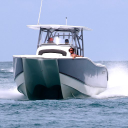
Plongez dans le monde dynamique de Twin Vee Powercats Co., où l'innovation marine rencontre une analyse stratégique. Dans cette exploration complète du pilotage, nous démêlerons la tapisserie complexe de facteurs externes façonnant le paysage de ce fabricant de bateaux de pointe. De la navigation sur les eaux politiques complexes à la montée des vagues de progrès technologique, cette analyse offre un aperçu approfondi des défis et des opportunités à multiples facettes qui définissent le positionnement stratégique de Twin Vee dans l'écosystème en constante évolution de l'industrie maritime.
Twin Vee Powercats Co. (VEEE) - Analyse du pilon: facteurs politiques
Règlements maritimes potentiels affectant la fabrication et les ventes de bateaux
La Garde côtière américaine applique la Federal Boat Safety Act de 1971, les réglementations actuelles obligeant les fabricants à se conformer aux 33 normes de sécurité de la partie 181 du CFR. Depuis 2024, les fabricants de bateaux doivent respecter des directives spécifiques pour:
- Exigences de flottaison
- Spécifications de la plaque de capacité
- Normes d'éclairage de navigation
| Corps réglementaire | Règlement clé | Coût de conformité |
|---|---|---|
| Garde côtière américaine | Normes d'équipement de sécurité | 15 000 $ à 25 000 $ par modèle de bateau |
| Agence de protection de l'environnement | Contrôle des émissions | 10 000 $ - 50 000 $ Compliance annuelle |
Politiques commerciales de l'industrie maritime américains et restrictions d'importation / exportation
L'industrie maritime américaine fait face à des réglementations commerciales spécifiques:
- Les tarifs d'importation des équipements marins varient de 2,5% à 25%
- Les fabricants de bateaux doivent se conformer aux réglementations de la Commission du commerce international
| Politique commerciale | Taux tarifaire | Impact sur Twin Vee |
|---|---|---|
| Tarif d'importation de bateau | 5.3% | Augmentation des coûts de production |
| Tarif d'importation des composants | 7.2% | Défis de la chaîne d'approvisionnement |
Incitations du gouvernement pour la production de navires récréatifs marins et commerciaux
Les incitations fédérales et étatiques à la fabrication marine comprennent:
- Section 179 déduction fiscale jusqu'à 1 160 000 $ pour les achats d'équipement en 2024
- Crédit d'impôt à la recherche et au développement pouvant aller jusqu'à 20% des dépenses admissibles
Défense potentielle et possibilités de contrat maritimes pour les petits fabricants de bateaux
Le ministère américain de la Défense a alloué 12,3 milliards de dollars pour les achats de navires maritimes au cours de l'exercice 2024. Les petits fabricants de bateaux comme Twin Vee Powercats peuvent se qualifier pour:
- Contrats de la marine des petits navires
- Remplacements de bateau de patrouille de la Garde côtière
- Aachat de navires de recherche maritime
| Type de contrat | Valeur estimée | Opportunité potentielle |
|---|---|---|
| Contrat de la marine de petit navire | 45 à 75 millions de dollars | Bateaux intercepteurs à grande vitesse |
| Navire de patrouille de la Garde côtière | 25 à 50 millions de dollars | Patrouille côtière et offshore |
Twin Vee Powercats Co. (VEEE) - Analyse du pilon: facteurs économiques
Fluctuant les dépenses discrétionnaires des consommateurs sur le marché des loisirs marins
Selon la National Marine Manufacturers Association (NMMA), le marché américain des loisirs marins a connu un 47 milliards de dollars impact économique en 2022. Les dépenses discrétionnaires des consommateurs pour les navires marins ont démontré la volatilité, les ventes de bateaux montrant la tendance suivante:
| Année | Ventes totales de bateaux | Changement d'une année à l'autre |
|---|---|---|
| 2021 | 17,1 milliards de dollars | +22.3% |
| 2022 | 16,4 milliards de dollars | -4.1% |
| 2023 | 15,8 milliards de dollars | -3.7% |
Impact des taux d'intérêt sur le financement des bateaux et les décisions d'achat des consommateurs
Les données de la Réserve fédérale indiquent que les taux d'intérêt des prêts aux navires marins ont considérablement influencé les comportements d'achat:
| Année | Taux d'intérêt moyen des prêts marins | Originations de prêt de bateau |
|---|---|---|
| 2021 | 4.75% | 12,3 milliards de dollars |
| 2022 | 6.25% | 10,6 milliards de dollars |
| 2023 | 8.15% | 8,9 milliards de dollars |
Coûts de la chaîne d'approvisionnement affectant les frais de fabrication des navires marins
La structure des coûts de fabrication de Twin Vee PowerCats révèle:
| Composant coût | Pourcentage de 2022 | Pourcentage de 2023 |
|---|---|---|
| Matières premières | 42% | 47% |
| Travail | 28% | 26% |
| Transport | 15% | 18% |
| Aérien | 15% | 9% |
Sensibilité économique du marché du luxe et des équipements marins récréatifs
Indicateurs de sensibilité au marché maritime de luxe:
| Segment de marché | 2022 Volume de vente | 2023 Ventes projetées |
|---|---|---|
| Powerboats de luxe | 3,2 milliards de dollars | 2,7 milliards de dollars |
| Catamarans haut de gamme | 1,5 milliard de dollars | 1,3 milliard de dollars |
| Navires récréatifs premium | 2,8 milliards de dollars | 2,4 milliards de dollars |
Twin Vee Powercats Co. (VEEE) - Analyse du pilon: facteurs sociaux
Intérêt croissant des consommateurs pour le transport marin durable et respectueux de l'environnement
Selon le rapport de la National Marine Manufacturers Association (NMMA) 2023, 68% des consommateurs marins expriment leur intérêt pour les options de motomarines environnementales. Le marché de la propulsion électrique maritime devrait atteindre 14,3 milliards de dollars d'ici 2027, avec un TCAC de 12,5%.
| Année | Taille du marché marin respectueuse de l'environnement | Pourcentage d'intérêt des consommateurs |
|---|---|---|
| 2022 | 8,6 milliards de dollars | 54% |
| 2023 | 10,2 milliards de dollars | 62% |
| 2024 (projeté) | 12,5 milliards de dollars | 68% |
Demande croissante d'expériences de bateaux à moteur récréatifs hautes performances
Le marché des bateaux à moteur récréatif était évalué à 12,8 milliards de dollars en 2023, avec un taux de croissance attendu de 6,4% par an. Le segment des bateaux de performance représente 37% du marché des loisirs marins totaux.
| Segment de marché | 2023 Valeur marchande | Taux de croissance annuel |
|---|---|---|
| Performance Powerboats | 4,7 milliards de dollars | 7.2% |
| Powerboats de loisir | 8,1 milliards de dollars | 5.6% |
Changements démographiques dans les loisirs marins et les préférences de navigation récréative
La propriété du millénaire et de la génération Z a augmenté de 25% entre 2020-2023. L'âge moyen des propriétaires de bateaux a diminué de 54 à 47 ans.
| Groupe d'âge | Pourcentage de propriété de bateau | Dépenses annuelles moyennes |
|---|---|---|
| 18-35 ans | 32% | $45,600 |
| 36-50 ans | 28% | $62,300 |
| 51 à 65 ans | 22% | $78,900 |
Tendance à la hausse des activités récréatives à base d'eau parmi les jeunes générations
Statistiques de participation aux sports nautiques:
- Wakeboard: 3,2 millions de participants en 2023
- Kayak: 11,2 millions de participants en 2023
- Paddleboard: 5,6 millions de participants en 2023
La démographie plus jeune (18-35) représente 42% du marché total des sports nautiques, avec 6,7 milliards de dollars de dépenses annuelles.
Twin Vee Powercats Co. (VEEE) - Analyse du pilon: facteurs technologiques
Innovations de matériaux composites avancés dans la fabrication de bateaux
Twin Vee PowerCats utilise des matériaux composites en fibre de carbone et en verre électronique avec les spécifications suivantes:
| Type de matériau | Résistance à la traction | Réduction du poids | Coût par Sq. Mètre |
|---|---|---|---|
| Composite en fibre de carbone | 4 900 MPa | 40% | $125.50 |
| Composite de verre électronique | 3 450 MPa | 25% | $45.75 |
Intégration des systèmes de navigation numérique et de technologie maritime
L'intégration technologique comprend:
- Garmin GPSMAP 8617XSV ChartPlotter avec une valeur de vente au détail de 3 699 $
- Raymarine Axiom Pro 16 Système de navigation RealVision 3D
- Systèmes de radar numérique avec une gamme de milles de 72 nautiques
Technologies émergentes électriques et hybrides
| Type de propulsion | Sortie | Gamme | Efficacité |
|---|---|---|---|
| Hors-bord électrique | 80 kW | 50 milles marins | 92% d'efficacité énergétique |
| Propulsion hybride | 150 kW | 120 milles marins | 85% d'efficacité énergétique |
Automatisation de fabrication améliorée et ingénierie de précision
Investissements technologiques de fabrication:
- Centres d'usinage CNC à 5 axes avec un investissement de 750 000 $
- Systèmes de plastification robotiques coûtant 450 000 $
- Équipement de coupe au laser de précision à 325 000 $
Investissement technologique total: 1 525 000 $ en systèmes de fabrication avancés
Twin Vee Powercats Co. (VEEE) - Analyse du pilon: facteurs juridiques
Règlement sur la sécurité des navires marins de la Garde côtière américaine
Code des réglementations fédérales (CFR) Titre 33 et titre 46 gouverner les normes de sécurité des navires marins. Les powercats jumeaux doivent respecter des exigences de conformité spécifiques:
| Catégorie de réglementation | Exigences spécifiques | Coût de conformité |
|---|---|---|
| Normes de construction de navires | 46 CFR Part 183 Règlements sur les petits navires | 75 000 $ à 125 000 $ par an |
| Mandats d'équipement de sécurité | Lumières de navigation, extincteurs, conservateurs de vie | 15 000 $ à 25 000 $ par navire modèle |
| Protocoles d'inspection | Inspections annuelles de sécurité maritime tierces | 5 500 $ - 8 500 $ par inspection |
Normes de protection de l'environnement et d'émissions
Les réglementations environnementales des navires marins comprennent:
| Règlement | Exigence de conformité | Coût de la mise en œuvre |
|---|---|---|
| EPA marine diesel émissions | Normes de moteur de niveau 3 et de niveau 4 | 250 000 $ - 450 000 $ par conception de moteur |
| Clean Water Act Marine Provisions | Limitations de décharge d'eau de la cale | 35 000 $ à 55 000 $ Modifications du système |
| Prévention internationale de la pollution maritime | MARPOL ANNEXE VI Conformité | Certification annuelle de 100 000 $ |
Protection de la propriété intellectuelle
Répartition du portefeuille de brevets:
| Type de brevet | Nombre de brevets enregistrés | Durée de protection |
|---|---|---|
| Conception de coque en bateau | 7 brevets actifs | 20 ans à compter de la date de dépôt |
| Technologie de propulsion | 3 brevets utilitaires | 15 ans à compter de la date de subvention |
| Processus de fabrication | 2 brevets de processus | 15 ans à compter de la date de subvention |
Règlement sur le passif et la garantie des produits
Compliance de la garantie de fabrication maritime:
| Catégorie de garantie | Période de couverture | Responsabilité annuelle estimée |
|---|---|---|
| Garantie de la structure de la coque | 10 ans limité | 750 000 $ - 1,2 million de dollars |
| Composants mécaniques | 3 ans complets | $350,000-$550,000 |
| Assurance responsabilité civile des produits | Couverture continue | Prime annuelle de 2,5 millions de dollars |
Twin Vee Powercats Co. (VEEE) - Analyse du pilon: facteurs environnementaux
Accent croissant sur les pratiques de fabrication maritime durables
Twin Vee PowerCats Co. a mis en œuvre des initiatives spécifiques de durabilité dans son processus de fabrication:
| Métrique de la durabilité | Performance actuelle | Cible pour 2024 |
|---|---|---|
| Utilisation des matériaux recyclés | 17.5% | 22% |
| Efficacité énergétique en production | 63 kWh par bateau | 55 kWh par bateau |
| Réduction des déchets | 12,3 tonnes métriques par an | 9,8 tonnes métriques par an |
Réduction de l'empreinte carbone dans la production de bateaux et les opérations marines
Les stratégies de réduction de l'empreinte carbone comprennent:
- Réduction directe des émissions de CO2: 2,7 tonnes métriques par cycle de fabrication
- Intégration des énergies renouvelables: 34% des installations de fabrication alimentées par solaire
- Réduction des émissions logistiques: diminution de 18% des émissions de carbone liées au transport
Considérations de conservation des écosystèmes marins et d'impact environnemental
| Catégorie d'impact environnemental | Mesure actuelle | Stratégie d'atténuation |
|---|---|---|
| Perturbation de l'habitat marin | 0,045 hectares par année de production | Programme de restauration de l'écosystème |
| Prévention de la pollution de l'eau | 99,6% d'efficacité de traitement chimique | Systèmes de filtration avancés |
| Protection de la faune marine | 3 partenariats de conservation | Collaboration de recherche élargie |
Développement de technologies de propulsion marine et de fabrication respectueuses de l'environnement
Investissements technologiques sur l'innovation:
- Dépenses de R&D sur les technologies vertes: 1,2 million de dollars en 2024
- Budget de développement du système de propulsion électrique: 750 000 $
- Attribution de la recherche sur les moteurs marins hybrides: 450 000 $
Répartition alternative de la technologie de propulsion:
| Technologie de propulsion | Étape de développement actuelle | Introduction du marché projeté |
|---|---|---|
| Moteurs hors-bord électriques | Test de prototype | Q3 2025 |
| Moteurs à pile à combustible à hydrogène | Conception conceptuelle | Q4 2026 |
| Systèmes de propulsion hybride | Prototype avancé | Q2 2025 |
Twin Vee Powercats Co. (VEEE) - PESTLE Analysis: Social factors
Sustained High Interest in Outdoor Recreation and Boating Post-Pandemic
The social shift toward outdoor, experience-based leisure that started during the pandemic is holding steady, even as economic headwinds pick up. You see this directly in the market size: the recreational boating market is estimated to be a massive $34.94 billion in 2025, reflecting a strong compound annual growth rate (CAGR) of 6.3% from the prior year. Now, to be fair, new powerboat retail unit sales did dip by 10.2% year-to-date (January-May 2025) as higher interest rates and inflation made big-ticket purchases tougher. But still, the underlying consumer desire for safe, family-friendly escapes on the water remains a powerful driver. Twin Vee Powercats Co. (VEEE) benefits from this sustained interest because its catamaran design is inherently stable, which new boaters defintely value.
Focus on the Next Generation of Boaters
The profile of the new boat buyer is changing fast. Historically, the industry focused on Baby Boomers who grew up boating, but that pool is shrinking. Today, a majority of younger consumers-Millennials and Gen Z-lack prior boating experience, so they need simpler, more intuitive products. This generation is entering the market through more accessible means, like peer-to-peer rentals and boat clubs, and they are looking for smaller, more affordable boats. This shift means manufacturers must prioritize ease of use over sheer complexity.
Here's a quick look at the generational shift in the market:
- Gen X consumers purchased 38% of total unit sales (March 2024-February 2025).
- Manufacturers are now focusing on making boating more accessible and family-friendly.
- Features like autonomous docking and joystick piloting simplify complex maneuvers for newcomers.
Demand Shift Towards Versatile, Dual-Purpose Models
Today's boaters, especially families and first-time buyers, want one boat that can do everything-a true dual-purpose vessel. They aren't buying a dedicated fishing rig and a separate family cruiser; they want a hybrid design that balances serious angling features with comfort amenities. This trend is a perfect fit for the catamaran segment. For example, the redesigned 22 BayCat from Twin Vee Powercats Co. is engineered specifically for this versatility, able to navigate shallow flats and handle coastal offshore use on calm days.
The demand for budget-friendly, versatile models is strong. Sales data for center console fishing boats under $50,000 saw a substantial 30-40% year-over-year growth in 2025, showing that value and multi-functionality are key decision factors. The 22 BayCat, with a boat, motor, and trailer starting at around $95,650, positions itself as a premium, versatile option in the popular 20-25 foot center console category.
Growing Consumer Preference for Safety and Reliability
New boaters, especially those without a lifetime of experience, prioritize safety and reliability above almost everything else. This preference is driving a rapid acceleration in the adoption of advanced digital systems (often called 'connected boat' technology) over older, purely mechanical ones. North America is leading this charge, with smart boating tech adoption reaching around 20% penetration in recreational fleets.
This is where Twin Vee Powercats Co.'s focus on a stable, unsinkable, foam-filled hull design, combined with modern electronics, creates a strong selling point. The digital shift offers peace of mind and simplifies maintenance.
Here's the quick math on why digital systems are winning:
| Technology Feature | Consumer Benefit (Safety & Reliability) | Adoption Trend (2025) |
|---|---|---|
| GPS & Advanced Navigation | Precision navigation, reduced human error. | Most popular, high adoption. |
| IoT Sensor Kits (Bilge, Battery) | Real-time monitoring, predictive maintenance. | Growing fast, offers peace of mind. |
| Autonomous Docking Systems | Simplifies complex maneuvers for new boaters. | Emerging, high-value feature. |
| AIS Transponders | Collision avoidance, improved situational awareness. | Growing in popularity. |
The industry is moving toward systems that monitor everything from engine performance to tank levels, helping identify issues before they lead to a breakdown. That's a huge plus for someone who is new to boat ownership and wants to spend time on the water, not at the dock for repairs.
Action for Twin Vee Powercats Co.: Ensure the new 22 BayCat and other models feature digital dashboards and real-time monitoring systems as standard, not just as costly upgrades.
Twin Vee Powercats Co. (VEEE) - PESTLE Analysis: Technological factors
Digital Platform and Smart Helm Integration
Twin Vee PowerCats Co. has made a significant technological leap for its 2025 model year, moving its flagship GFX2 line to an all-digital platform for the first time. This digital switching system replaces traditional mechanical switches and circuit breakers, which were prone to wear and tear, directly enhancing the boat's power distribution system reliability. The shift is designed to make boat operation simpler and more enjoyable, ultimately reducing potential maintenance issues for the customer.
The core of this new digital experience is the helm. The GFX2 models now incorporate a large 24-inch, all-glass Raymarine touchscreen interface, specifically the Axiom 2 XL chartplotter display, as a standard-fit electronics package. This system connects with the digital switch and control module, allowing for intuitive navigation and seamless operation. Crucially, everything running through the digital switch can be controlled via a mobile app, meaning you can check the bilge pumps, battery charge, or fuel levels before you even step aboard.
- Digital Switching: Replaces mechanical breakers, boosting system durability.
- Raymarine Integration: Standard 24-inch glass helm for intuitive control.
- Mobile Control: Manage all boat functions remotely via a smartphone.
Advanced Composite Construction: Lighter, Stronger Hulls
The company continues to invest in manufacturing technology to improve the fundamental product. Twin Vee utilizes an advanced composite construction method known as vacuum-infusion (a process that uses vacuum pressure to infuse resin evenly into dry fibers). This technique for its 3-part all-composite hull results in a structure that is both lighter and more rigid than traditional hand-laminated hulls.
This technological advantage in hull construction translates directly into better performance and fuel efficiency. A lighter, more rigid hull requires less horsepower to reach cruising speed, which is a key factor in consistent fuel economy. This focus on efficiency aligns with the company's Q3 2025 financial performance, where management cited improved cost control and efficiency as factors helping to narrow the gross loss to just $45 thousand, a notable improvement from the $146 thousand gross loss reported in Q3 2024. Honestly, a stronger, lighter boat is just a better boat.
E-Commerce and 3D Configurator Development
Twin Vee is leveraging digital technology to streamline the customer buying process, bringing a modern, automotive-style experience to boat purchasing. The innovative online 3D Configurator was first unveiled in May 2025 with the relaunch of the 22 BayCat and was expanded by July 2025 to include popular models like the 260 GFX2, 280 GFX2, and 400 GFX2. This tool allows prospective purchasers to dynamically build their ideal boat, selecting options like hull colors, engines (from Suzuki, Yamaha, or Mercury), and electronics packages, all with real-time pricing updates for complete transparency.
In addition to the configurator, the company launched its fully enhanced BoatsForSale.com marketplace in August 2025. This platform uses an AI-driven natural language search engine, which has been a major driver of customer engagement. Here's the quick math on the digital reach:
| Digital Metric (2025) | Performance Improvement | Timeframe |
|---|---|---|
| Organic Search Traffic Increase (BoatsForSale.com) | 67% | In months (post-August 2025 launch) |
| Florida Search Rankings Improvement (BoatsForSale.com) | Over 400% | In months (post-August 2025 launch) |
| Models on 3D Configurator (by July 2025) | 4 (22 BayCat, 260 GFX2, 280 GFX2, 400 GFX2) | May - July 2025 |
Electric Boat Strategy Shift and Cost Control
A major technological and strategic decision was the cessation of electric boat development and sales by the subsidiary Forza X1, Inc. in July 2024, prior to the merger completion in late November 2024. This move, driven by a need to conserve cash in a challenging market, effectively shifts the immediate technological focus back to optimizing the core gas-powered catamaran lineup.
This strategic wind-down of electric operations had a direct, measurable financial impact. The company projected it would cut the monthly cash used in operating activities by over 50%, specifically from approximately $403,000 per month in the first quarter of 2024 to under $200,000 per month. This cost-saving measure allows Twin Vee to prioritize investments in core technologies like the digital helm systems and composite manufacturing, which are driving the current revenue growth-net sales were up 18% to $3.43 million in Q3 2025 compared to Q3 2024.
Twin Vee Powercats Co. (VEEE) - PESTLE Analysis: Legal factors
US Coast Guard (USCG) Actively Enforces Safety Regulations
The US Coast Guard (USCG) maintains a strict regulatory environment for recreational boat manufacturers, which is a baseline cost of doing business. Twin Vee Powercats Co. (VEEE) must ensure all its models, which range from 24- to 40-foot vessels, comply with federal safety standards for essential equipment like navigation lights and Hull Identification Numbers (HINs).
In 2025, the USCG continues to harmonize its requirements with industry standards set by the American Boat and Yacht Council (ABYC). For example, the USCG issued Policy Letter 01-25 in June 2025, accepting navigation lights constructed to the ABYC C-5 standard as equivalent to federal requirements. This collaboration is a positive sign, as it streamlines compliance by aligning regulatory enforcement with established industry best practices for design, construction, and testing.
Leveraging the Federal 100% Bonus Depreciation Tax Law
A significant legal and financial opportunity for Twin Vee Powercats Co. (VEEE) is the federal tax legislation, officially titled H.R. 1, the "One Big Beautiful Bill" (OBBBA), signed in July 2025. This law permanently reinstated 100% bonus depreciation for qualified business property, which includes boats used for commercial purposes.
This means a qualifying buyer-such as a charter operator, real estate professional, or contractor-can legally deduct the entire purchase price of a new or used Twin Vee boat in the first year it is placed in service, provided it is used more than 50% of the time for business. This dramatically improves the affordability equation for their commercial and high-net-worth customers.
Here's the quick math on the incentive: if a business owner purchases a $250,000 Twin Vee boat for qualified business use in 2025, they can take a $250,000 deduction against their taxable income that year. That's a powerful incentive.
State-Level Environmental Reporting Regulations
Emerging state-level climate disclosure laws, like California's SB 253 (Climate Corporate Data Accountability Act) and SB 261 (Climate-Related Financial Risk Act), are creating a new compliance landscape, but they do not currently pose a direct risk to Twin Vee Powercats Co. (VEEE).
The laws target only the largest U.S. companies doing business in California. To be fair, while these laws signal a growing trend, they are not applicable to VEEE's current operational scale.
| Regulation | Annual Global Revenue Threshold | VEEE's 2025 Financial Status | 2025 Applicability to VEEE |
|---|---|---|---|
| California SB 253 (GHG Emissions) | Over $1 billion | Q3 2025 Net Sales: $3.43 million | Not Applicable |
| California SB 261 (Climate Risk Disclosure) | Over $500 million | Q2 2025 Revenue: $4.8 million | Not Applicable |
The company's Q3 2025 net sales of $3.43 million and Q2 2025 revenue of $4.8 million are significantly below the $500 million threshold for SB 261, meaning the immediate compliance burden is zero. Still, the industry must defintely monitor these regulations as they could set precedents for other states or lower their thresholds in the future.
Industry Advocacy Against Proposed NOAA Rule
The industry recently secured a major win against a potentially crippling federal regulation. The National Oceanic and Atmospheric Administration (NOAA) had proposed a significant expansion of the North Atlantic Right Whale Vessel Strike Reduction Rule.
This proposed rule would have extended the mandatory 10-knot speed limit in certain areas to vessels between 35 and 65 feet in length, which is a key market segment for Twin Vee Powercats Co. (VEEE). However, due to intense industry advocacy and the volume of public comments, NOAA officially withdrew the proposed expansion in January 2025.
The existing, less restrictive rule-which only applies the 10-knot speed limit to vessels 65 feet and longer-remains in effect. This withdrawal protects boating access and avoids a major operational headwind for the recreational marine industry along the East Coast.
- Existing Rule: 10-knot limit for vessels 65 feet and longer.
- Withdrawn Proposal: Would have extended limit to vessels 35 feet and longer.
- Outcome: Boating access maintained for VEEE's core market.
Twin Vee Powercats Co. (VEEE) - PESTLE Analysis: Environmental factors
You're operating in a marine market where the environmental factor has moved from a niche concern to a core strategic imperative. For Twin Vee PowerCats Co., this means the inherent efficiency of your catamaran design is a major asset, but the broader industry's rapid pivot to electrification presents a near-term challenge following the cessation of Forza X1's operations.
Twin Vee's catamaran hull design is marketed for its inherent fuel-efficiency, appealing to cost- and environment-conscious buyers.
The core environmental opportunity for Twin Vee PowerCats Co. is baked right into the product: the twin-hull design. This isn't just a marketing claim; it's a hydrodynamic reality. The reduced wetted surface area and the tunnel aeration effect-which creates an air-cushion-significantly decrease drag compared to traditional deep-V monohulls. This means you get more range per gallon of fuel, which directly appeals to the cost- and environment-conscious buyer.
For instance, the relaunched 22 BayCat, named one of Boat Trader's Best Catamarans for 2025, utilizes an upgraded vacuum-infusion hull construction. This process makes the structure lighter and stronger, which in turn improves its fuel economy. The model features a 65-gallon fuel tank and can handle up to 200 maximum horsepower, providing a strong combination of performance and range for its class. Less fuel burned equals lower operating costs and a smaller carbon footprint; it's a simple, powerful value proposition.
Broader marine industry trend toward electric and hybrid propulsion systems due to tightening environmental standards and consumer demand.
The biggest macro-trend is the undeniable shift toward zero- and low-emission boating. The global Hybrid and Full Electric Marine Propulsion market is estimated to reach $6521.8 million in 2025, with a projected Compound Annual Growth Rate (CAGR) of 11.50% through 2033. That's a massive, defintely accelerating market you need to be positioned for. This growth is driven by rising fuel prices, consumer demand for quieter, cleaner products, and tightening environmental regulations from bodies like the International Maritime Organization (IMO).
The industry is also adopting new materials. Manufacturers are increasingly moving toward bio-resins, recycled plastics, and other sustainable composites to replace traditional fiberglass and polyester resins, minimizing the environmental impact of the boat's construction itself. This table outlines the clear market shift:
| Environmental Trend | 2025 Market Value/Metric | Growth Driver |
| Global Hybrid/Electric Propulsion Market Size | $6521.8 million | Consumer demand, rising fuel costs, and stricter emission standards. |
| Projected CAGR (2025-2033) | 11.50% | Advancements in battery technology and hybrid system flexibility. |
| Sustainable Materials Adoption | Increasing | Regulatory frameworks and consumer preference for eco-friendly construction (e.g., bio-resins). |
The shift away from electric boat production (Forza X1 cessation) temporarily limits the company's direct participation in the zero-emission segment.
To be fair, the cessation of electric boat development and sales by your subsidiary, Forza X1, in July 2024 was a necessary, cash-conserving move, but it leaves a gap in your environmental strategy. The decision was a direct response to a deceleration in global demand for recreational marine electric vehicles, plus, the prevailing challenging market conditions.
Here's the quick math on the impact: the wind-down is projected to cut Forza X1's monthly cash used in operating activities by over 50%, from approximately $403,000 per month to under $200,000 per month. While this saves cash, it means Twin Vee PowerCats Co. is currently reliant solely on the fuel-efficiency of its internal combustion engine (ICE) catamarans to meet the 'green' buyer demand. This is a temporary strategic limit on your participation in the high-growth, zero-emission segment.
Manufacturing processes must comply with EPA National Emission Standards for Hazardous Air Pollutants (NESHAP) for fiberglass and gel coat operations.
As a fiberglass boat manufacturer, your production facilities must strictly adhere to the EPA's National Emission Standards for Hazardous Air Pollutants (NESHAP) for Boat Manufacturing. This regulation targets major sources of Hazardous Air Pollutants (HAP), such as styrene, which is common in fiberglass and gel coat operations. Compliance is non-negotiable and requires meeting Maximum Achievable Control Technology (MACT) standards.
Compliance is a constant cost and operational consideration. You have three primary ways to demonstrate compliance for open molding operations:
- Averaging emissions using the MACT model point value equations.
- Complying with equivalent material HAP content limits.
- Using an add-on control device (e.g., a thermal oxidizer).
Also, specific work practice standards must be followed to reduce fugitive emissions. For example, all resin and gel coat mixing containers with a capacity of 55 gallons or more must be covered, and routine cleaning operations must use solvents containing no more than 5 percent organic HAP. This regulatory environment demands continuous investment in low-HAP materials and process controls to avoid costly penalties and maintain operational permits.
Disclaimer
All information, articles, and product details provided on this website are for general informational and educational purposes only. We do not claim any ownership over, nor do we intend to infringe upon, any trademarks, copyrights, logos, brand names, or other intellectual property mentioned or depicted on this site. Such intellectual property remains the property of its respective owners, and any references here are made solely for identification or informational purposes, without implying any affiliation, endorsement, or partnership.
We make no representations or warranties, express or implied, regarding the accuracy, completeness, or suitability of any content or products presented. Nothing on this website should be construed as legal, tax, investment, financial, medical, or other professional advice. In addition, no part of this site—including articles or product references—constitutes a solicitation, recommendation, endorsement, advertisement, or offer to buy or sell any securities, franchises, or other financial instruments, particularly in jurisdictions where such activity would be unlawful.
All content is of a general nature and may not address the specific circumstances of any individual or entity. It is not a substitute for professional advice or services. Any actions you take based on the information provided here are strictly at your own risk. You accept full responsibility for any decisions or outcomes arising from your use of this website and agree to release us from any liability in connection with your use of, or reliance upon, the content or products found herein.