
|
Twin Vee PowerCats Co. (VEEE): Analyse SWOT [Jan-2025 MISE À JOUR] |

Entièrement Modifiable: Adapté À Vos Besoins Dans Excel Ou Sheets
Conception Professionnelle: Modèles Fiables Et Conformes Aux Normes Du Secteur
Pré-Construits Pour Une Utilisation Rapide Et Efficace
Compatible MAC/PC, entièrement débloqué
Aucune Expertise N'Est Requise; Facile À Suivre
Twin Vee Powercats Co. (VEEE) Bundle
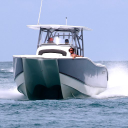
Plongez dans le paysage stratégique de Twin Vee Powercats Co. (VEEE), un fabricant de marins pionnier qui trace un cours audacieux dans le monde compétitif des catamarans hautes performances. Cette analyse SWOT complète révèle le positionnement unique de l'entreprise, explorant comment leur conception innovante de la coque et leurs capacités stratégiques les distinguent dans le secteur des transports marins. Des avantages du marché de niche aux trajectoires de croissance potentielles, nous déballerons les facteurs critiques qui pourraient façonner le succès futur de Twin Vee dans une industrie marine en constante évolution.
Twin Vee Powercats Co. (VEEE) - Analyse SWOT: Forces
Spécialisé dans la fabrication de catamarans de puissance haute performance
Twin Vee PowerCats se spécialise dans les conceptions de catamaranes jumelles uniques avec les spécifications clés suivantes:
| Métrique | Spécification |
|---|---|
| Gamme de produits actuelle | 8 modèles de catamaran différents |
| Plage de longueur moyenne | 22-40 pieds |
| Capacité de fabrication | Environ 150-200 navires par an |
Position du marché de niche dans les navires marins de luxe
Faits saillants du positionnement du marché:
- Cibler les segments marins récréatifs et commerciaux haut de gamme
- La stratégie de tarification premium avec un coût moyen des navires coûte entre 150 000 $ et 750 000 $
- Axé sur les clients axés sur les performances
Des revenus croissants et en expansion de la gamme de produits
| Exercice | Revenus totaux | Croissance des revenus |
|---|---|---|
| 2022 | 24,3 millions de dollars | 18.5% |
| 2023 | 31,6 millions de dollars | 30.0% |
Grande réputation de marque
Métriques de performance de la marque:
- Évaluation de satisfaction du client: 4.7 / 5
- Taux client répété: 42%
- Prix de l'industrie: 3 années consécutives d'excellence en génie maritime
Twin Vee Powercats Co. (VEEE) - Analyse SWOT: faiblesses
Capacité de production limitée
Depuis le Q4 2023, Twin Vee PowerCats a démontré un Capacité de production annuelle limitée d'environ 300 à 350 navires marins. Par rapport aux géants de l'industrie comme Boston Whaler et Yamaha Marine, la production manufacturière de la société reste considérablement limitée.
| Métrique | Powercats jumeaux | Moyenne de l'industrie |
|---|---|---|
| Capacité de production annuelle | 325 navires | 1 200-1,500 navires |
| Installations de fabrication | 1 installation principale | 3-5 installations |
Capitalisation boursière et ressources financières
En février 2024, Twin Vee PowerCats (VEEE) exposent Capacités financières limitées:
- Capitalisation boursière: 42,6 millions de dollars
- Revenu total (2023): 18,3 millions de dollars
- Réserves en espèces: environ 2,7 millions de dollars
- Ratio dette / fonds propres: 0,65
Gamme de produits étroits
Le portefeuille de produits de l'entreprise reste concentré exclusivement sur les catamarans de puissance, avec une diversité de modèle limitée:
| Catégorie de produits | Nombre de modèles | Plage de taille |
|---|---|---|
| Catamarans de puissance | 7 modèles | 22-40 pieds |
| Variantes de pêche | 4 modèles | 24 à 36 pieds |
Vulnérabilités de la chaîne d'approvisionnement
Twin Vee PowerCats fait face à des risques potentiels de chaîne d'approvisionnement avec Dépendance à l'égard des fournisseurs de fabrication marine limitée:
- Fournisseurs des composants principaux: 5-6 vendeurs critiques
- Concentration géographique: 80% des fournisseurs situés dans le sud-est des États-Unis
- Composants à source unique: environ 40% des composants marins critiques
Twin Vee Powercats Co. (VEEE) - Analyse SWOT: Opportunités
Demande croissante de navires marins récréatifs et commerciaux à haute performance
Le marché mondial des navires marins devrait atteindre 236,29 milliards de dollars d'ici 2027, avec un TCAC de 5,8%. La taille du marché récréatif de la navigation de navigation était évaluée à 57,64 milliards de dollars en 2022.
| Segment de marché | Valeur 2022 | Croissance projetée |
|---|---|---|
| Bateaux récréatifs | 57,64 milliards de dollars | 5,9% CAGR |
| Navires marins commerciaux | 178,65 milliards de dollars | 5,7% CAGR |
Expansion potentielle sur les marchés marins internationaux
Les principaux marchés marins internationaux avec un potentiel de croissance significatif:
- Le marché maritime Asie-Pacifique devrait atteindre 95,3 milliards de dollars d'ici 2026
- Le marché maritime du Moyen-Orient qui devrait croître à 6,2% de TCAC
- Marché marin européen d'une valeur de 62,5 milliards de dollars en 2022
Intérêt croissant pour les conceptions de bateaux respectueux de l'environnement et économes en carburant
Statistiques du marché des navires marins durables:
| Segment respectueux de l'environnement | 2022 Taille du marché | Croissance projetée |
|---|---|---|
| Bateaux électriques | 4,8 milliards de dollars | 13,5% CAGR |
| Navires marins hybrides | 2,3 milliards de dollars | 11,7% CAGR |
Diversification possible dans les technologies de transport marin émergentes
Segments de marché des technologies marines émergentes:
- Le marché des navires marins autonomes prévus par 6,5 milliards de dollars d'ici 2030
- Marché avancé des technologies de la propulsion marine estimée à 12,4 milliards de dollars
- Solutions Marine IoT et Connectivité d'une valeur de 3,8 milliards de dollars en 2022
Twin Vee Powercats Co. (VEEE) - Analyse SWOT: menaces
Nature cyclique des marchés de bateaux récréatifs et de luxe marins
Le marché des bateaux récréatifs marins a démontré une volatilité importante, la taille du marché fluctuant entre 42,1 milliards de dollars en 2021 à 44,6 milliards de dollars en 2022, projetant une instabilité potentielle pour les powercats à double vee.
| Segment de marché | 2022 Valeur marchande | Taux de croissance projeté |
|---|---|---|
| Bateaux récréatifs | 29,3 milliards de dollars | 4.5% |
| Navires marins de luxe | 15,2 milliards de dollars | 3.8% |
Concurrence intense des fabricants de bateaux établis
Le paysage de fabrication des navires marins présente des défis compétitifs importants.
- Brunswick Corporation: 5,9 milliards de dollars de revenus annuels
- Yamaha Marine Group: 4,2 milliards de dollars de revenus du segment marin
- Boston Whaler: détenu par Brunswick, 750 millions de dollars de ventes annuelles estimées
Ralentissement économique potentiel affectant les dépenses discrétionnaires
Les indicateurs économiques suggèrent une réduction potentielle des dépenses des marchés marins de luxe.
| Indicateur économique | Valeur 2022 | Impact potentiel |
|---|---|---|
| Indice de confiance des consommateurs | 101.2 | Risque modéré |
| Croissance des revenus disponibles | 2.3% | Extension limitée |
Les coûts de matières premières croissants et les défis de la chaîne d'approvisionnement
Les fluctuations des coûts matérielles présentent des risques opérationnels importants.
- Les prix de la résine en fibre de verre ont augmenté de 35% en 2022
- Matériaux de qualité marine en aluminium en hausse de 28% d'une année sur l'autre
- Les pénuries de composants électroniques marins atteignant 15 à 20%
Mesures de perturbation de la chaîne d'approvisionnement clés:
| Facteur de chaîne d'approvisionnement | 2022 Impact | Tendance projetée en 2024 |
|---|---|---|
| Extensions de délai | 45-60 jours | Réduction potentielle de 30 à 40 jours |
| Volatilité des coûts des matériaux | 22-27% | Stabilisation estimée de 15 à 20% |
Twin Vee Powercats Co. (VEEE) - SWOT Analysis: Opportunities
Accelerating demand in the electric boat (e-boat) segment with their new models.
You can't ignore the macro trend toward electrification, even if the execution is tricky. The global electric boat market is projected to grow from an estimated $6.78 billion in 2024 to $14.09 billion by 2030, a compound annual growth rate (CAGR) of 13.5%. This market tailwind is driven by consumer demand for quieter, low-maintenance, and eco-friendly options, plus tightening environmental regulations.
To be fair, Twin Vee Powercats Co. made a strategic pivot in 2025, consolidating its electric boat subsidiary, Forza X1, Inc., but ceasing direct electric boat production under that unit to focus on the core business. Still, the opportunity remains in the technology and the brand's catamaran design, which is inherently efficient. The company's prior investment in the electric space means they hold intellectual capital that could be leveraged through licensing or a future, more capital-efficient re-entry when battery costs drop further.
The market is growing fast. You just need to figure out how to re-enter it smarter.
Expanding the dealer network, especially in high-growth coastal US markets.
The company is executing a clear, effective strategy to expand its physical footprint, which directly drives revenue. This is a critical move to capture market share and reduce reliance on any single region or dealer. In the second quarter of 2025, Twin Vee Powercats Co. added 10 new dealer locations, followed by another 14 new dealer locations in the third quarter of 2025.
This expansion targets key coastal US markets where demand for power catamarans and fishing vessels is high. Specific new dealer locations secured in the first half of 2025 include:
- Cape Cod, MA (Goose Hummock)
- Long Island, NY (Patchogue Shores Marina)
- Bradenton, FL and Lake Placid, FL (Boater's World)
- Woodbury Heights, NJ and Wildwood, NJ (NuWave Marine)
Here's the quick math: With 24 new dealer locations added in Q2 and Q3 2025 alone, the company is creating a much broader sales funnel, which contributed to an 18% increase in net sales to $3.43 million in Q3 2025 compared to Q3 2024.
Leveraging the Aquasport brand to capture market share in the monohull segment.
The acquisition of the Aquasport brand in 2023, and the subsequent acquisition of Bahama Boat Works in Q2 2025 for $100,000, positions Twin Vee Powercats Co. to be a serious player in the massive monohull market, which is a different customer base than their core catamaran audience.
The strategy is to fill out the Aquasport line with new models, leveraging its 60-year pedigree to attract traditional center console buyers. New models for the 2025 model year include the Aquasport 280 Super Boat, notable for being the first to adopt Avikus Co., Ltd.'s advanced driver assistance and autonomous boat technology. Furthermore, the company is actively expanding the Bahama Boat lineup, an iconic luxury offshore brand, to include smaller, more accessible models:
- Bahama Boat Works 22-foot model
- Bahama Boat Works 24-foot model
- Bahama Boat Works 28-foot model
This dual-brand approach-Aquasport for the high-volume monohull fishing segment and Bahama Boat Works for the premium offshore market-significantly diversifies their revenue streams and market reach. The Bahama Boat Works acquisition, in particular, commenced customer deliveries in November 2025, marking a successful integration and broader commercial rollout.
Potential for military or commercial contracts due to catamaran stability and efficiency.
While direct military contracts are often unpredictable, the near-term commercial opportunity for Twin Vee Powercats Co. is substantial and actionable. The company is actively marketing the significant tax advantages available to business buyers in late 2025.
Under the federal 'Big Beautiful Bill,' any vessel used 50% or more for business purposes qualifies for 100% first-year depreciation. This is a huge financial incentive for commercial operators, charter companies, and other businesses.
Twin Vee is uniquely positioned to capitalize because their catamaran design is known for superior stability, fuel efficiency, and large deck space, making their 24'-40' models ideal for commercial applications like:
- Charter and transport operations
- Survey and commercial support
- Client entertainment and fishing
The company is touting its fast production and delivery capacity to help buyers secure this 2025 tax benefit before the end of the year, which should defintely drive a spike in commercial sales.
| Commercial Opportunity Metric | 2025 Data / Status | Implication |
|---|---|---|
| Tax Incentive | 100% first-year depreciation (for 50%+ business use) | Dramatically lowers the effective purchase cost for commercial buyers. |
| Target Models | 24'-40' catamaran models | Leverages the core product line's stability and efficiency. |
| Target Commercial Uses | Fishing, transport, charter, and survey | Broadens sales beyond the recreational consumer. |
| Strategic Advantage | Fast production/delivery capacity | Enables buyers to capture the 2025 tax deduction before year-end. |
Twin Vee Powercats Co. (VEEE) - SWOT Analysis: Threats
Economic Slowdown and High Interest Rates Defintely Suppress Consumer Discretionary Spending on Boats
You are operating in a market where the cost of ownership, especially financing, has spiked, and consumers are pulling back on big-ticket purchases. This is a massive headwind for Twin Vee Powercats Co. (VEEE) because a boat is the definition of a discretionary purchase. New powerboat retail unit sales declined by 10.2% year-to-date through May 2025, a clear sign of market softness.
The core issue is the borrowing cost. The average boat loan rate climbed from 4.5% in 2022 to nearly 7.8% in 2025, making monthly payments significantly higher for your customers. For a company that reported a $2.76 million net loss in Q3 2025, this reduced demand directly pressures the top line. Honestly, high rates are a sales killer for any product that requires a long-term loan.
Here's the quick math on how this macro environment translates to VEEE's financial reality as of Q3 2025:
| Metric | Q3 2025 Value | Context of Threat |
|---|---|---|
| Net Sales | $3.43 million | Risk of sales decline in Q4/2026 due to soft consumer sentiment (50.8 in May 2025). |
| Net Loss | $2.76 million | High fixed costs combined with lower unit sales volume mean losses are persistent. |
| Cash & Equivalents (Sept 30, 2025) | $2.92 million | Limited cash buffer to weather a prolonged downturn in discretionary spending. |
Major Competitors Could Enter the Catamaran Market with Superior Capital and Scale
The catamaran segment is growing, projected to reach a market size of $2.23 billion in 2025, but this growth attracts giants. Twin Vee is a smaller, focused player, and while you have a 30-year history in catamarans, you face rivals with immense production capacity and marketing budgets. Larger, established competitors like Groupe Beneteau, Fountaine Pajot, and Sunreef Yachts collectively held a substantial market share of over 13% in 2024 in the broader catamaran industry.
These large players have the capital to invest heavily in new, high-tech designs, electric propulsion systems, and expansive dealer networks that dwarf VEEE's. If one of them decides to aggressively target the mid-size power catamaran market-your core segment-it would immediately squeeze your margins and market share. Your recent strategic move to acquire Bahama Boat Works to enter the premium monohull market is a good diversification, but it also means you are now competing head-to-head with these same large, well-capitalized firms in a new category.
The threat comes from their scale:
- Pricing Power: Larger firms can absorb raw material cost spikes better.
- R&D Budget: They can fund rapid development of new, high-efficiency models.
- Distribution: Their global dealer networks ensure broader market access.
Continued Volatility in Raw Material Costs (e.g., Fiberglass, Resin) Squeezes Production Costs
Your boats are primarily built with fiberglass and resin, and the pricing for these petrochemical-derived materials remains volatile. The global marine fiberglass resin market size is estimated at $2,859.3 million in 2025, and its growth is hampered by fluctuating raw material prices. Raw material price volatility is a noted restraint on market expansion, directly impacting your production costs and profitability margins.
For example, commodity resins like High-Density Polyethylene (HDPE) and Low-Density Polyethylene (LDPE) saw price increases announced in Q2 2025, with one supplier announcing a +5 CPP increase for June 1, 2025. While these are commodity resins, the pricing pressure often ripples across all specialty resin markets, including those used in boat building. Given that Twin Vee's nine-month 2025 gross margin was just 9.6%, any sudden, significant material cost increase could easily push the company back toward a higher gross loss, reversing the Q3 2025 improvement where the gross loss narrowed to $45,000.
Regulatory Changes Impacting Boat Emissions or Safety Standards Could Require Costly Retooling
The regulatory environment is tightening, especially around environmental performance and emissions. While most immediate regulations target large commercial vessels, the trend will inevitably trickle down to recreational boat manufacturers like Twin Vee. The International Maritime Organization (IMO) is pushing for a Net-Zero Framework, with a new chapter in MARPOL Annex VI planned for adoption in October 2025 to introduce a global fuel standard.
Even if VEEE's smaller boats are not directly subject to the largest vessel rules (e.g., those over 5,000 gross tons), the pressure on engine manufacturers to meet stricter standards will increase your procurement costs. The Energy Efficiency Design Index (EEDI) Phase 3, which focuses on strengthening energy efficiency requirements for new ships, entered force for vessels over 400 gross tons in January 2025. This signals a clear regulatory direction toward cleaner, more efficient propulsion.
Any future state-level or federal regulations on recreational boat engine emissions, noise, or safety standards for new boat construction would force costly retooling of your manufacturing process and supply chain. This is a huge risk for a company with limited capital. You need to be defintely monitoring the US Coast Guard's (USCG) development of implementation rules for the EPA's new Vessel Incidental Discharge Act (VIDA) standards, which were finalized in October 2024.
Disclaimer
All information, articles, and product details provided on this website are for general informational and educational purposes only. We do not claim any ownership over, nor do we intend to infringe upon, any trademarks, copyrights, logos, brand names, or other intellectual property mentioned or depicted on this site. Such intellectual property remains the property of its respective owners, and any references here are made solely for identification or informational purposes, without implying any affiliation, endorsement, or partnership.
We make no representations or warranties, express or implied, regarding the accuracy, completeness, or suitability of any content or products presented. Nothing on this website should be construed as legal, tax, investment, financial, medical, or other professional advice. In addition, no part of this site—including articles or product references—constitutes a solicitation, recommendation, endorsement, advertisement, or offer to buy or sell any securities, franchises, or other financial instruments, particularly in jurisdictions where such activity would be unlawful.
All content is of a general nature and may not address the specific circumstances of any individual or entity. It is not a substitute for professional advice or services. Any actions you take based on the information provided here are strictly at your own risk. You accept full responsibility for any decisions or outcomes arising from your use of this website and agree to release us from any liability in connection with your use of, or reliance upon, the content or products found herein.