
|
San Juan Basin Royalty Trust (SJT): SWOT Analysis [Nov-2025 Updated] |

Fully Editable: Tailor To Your Needs In Excel Or Sheets
Professional Design: Trusted, Industry-Standard Templates
Investor-Approved Valuation Models
MAC/PC Compatible, Fully Unlocked
No Expertise Is Needed; Easy To Follow
San Juan Basin Royalty Trust (SJT) Bundle
You're looking at San Juan Basin Royalty Trust (SJT) right now, and the immediate financial reality is tough, but the long-term math is compelling. Distributions are suspended because the Trust is sitting on a cumulative net excess cost deficit of approximately $7.84 million as of November 2025, a direct result of the operator's massive $34.0 million capital push in 2024. This deficit, plus the need to replenish a $2.0 million reserve, is the immediate hurdle, and the low realized gas price of only $2.09 per Mcf for September 2025 production doesn't help. But still, the underlying asset is a substantial 75% royalty interest, and a successful drilling program could increase production by up to 70%, accelerating deficit repayment and flipping the script quickly. The current financial situation raises substantial doubt about the Trust's ability to continue as a going concern, per 2025 filings, but that risk is defintely the price of the potential reward. Dig into the full SWOT breakdown below to map the near-term risks to the long-term opportunity.
San Juan Basin Royalty Trust (SJT) - SWOT Analysis: Strengths
Passive structure means minimal administrative overhead; no debt and no employees.
The San Juan Basin Royalty Trust (SJT) is structured as a non-mortgage widely held fixed investment trust, which is a major operational strength. This passive structure means the Trust does not engage in any business or commercial activity itself; its sole function is to collect royalty income and distribute it to unit holders. This setup eliminates the high overhead costs and complexities of a traditional operating company.
You benefit from a remarkably lean operation. The Trust has no employees, and historically maintains no debt. While the Trust's financial statements for the fiscal year ended December 31, 2024, show a significant drain on cash reserves due to excess production costs, the fundamental structure remains debt-free, relying on the operator, Hilcorp Energy Company, for all capital and operational spending. The administrative expenses are a fraction of the revenue stream in a high-price environment; for the full year 2023, these expenses were approximately $1.75 million. That's a very clean structure.
The streamlined nature of the Trust translates to low administrative costs, which directly maximizes the distributable income when the underlying assets are profitable.
Holds a substantial 75% net overriding royalty interest in the mature, established San Juan Basin.
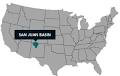
The Trust's principal asset is a substantial 75% net overriding royalty interest (NORI) in the Subject Interests, which are oil and gas properties in the San Juan Basin of northwestern New Mexico. This NORI is equivalent to a net profits interest, meaning the Trust receives 75% of the gross proceeds after the operator, Hilcorp, deducts production and operating costs.
The San Juan Basin is a mature, established producing region, reducing the exploration risk that plagues many energy investments. As of December 31, 2023, the Subject Interests covered approximately 151,900 gross acres (119,000 net producing acres) and included 5,444 gross completions (1,148.5 net completions). This scale and history provide a foundation of proved reserves, which as of year-end 2024, consisted of 99.8% natural gas.
Here's the quick math on the asset base:
| Metric | Value (as of Dec 31, 2023/2024) |
| Net Overriding Royalty Interest | 75% |
| Net Producing Acres | 119,000 |
| Net Completions | 1,148.5 |
| Proved Reserves Composition (Natural Gas) | 99.8% |
Operator's $34.0 million capital expenditure in 2024 is expected to drive future production growth.
A key strength is the operator's commitment to reinvesting in the underlying asset base, which is crucial for a depleting resource. Hilcorp Energy Company executed a large capital project plan in 2024, with total projected capital expenditures for the Subject Interests estimated at $34.0 million. This significant investment was intended to materially increase production volumes and offset natural decline curves.
This capital was strategically deployed across the field, focusing on higher-impact projects:
- Two new horizontal drilling projects in the Mancos formation: approximately $24.6 million spent.
- Well recompletions and workovers: approximately $8.0 million spent.
- Facilities projects for natural gas compression: approximately $1.0 million spent.
While the immediate production results were disappointing, the sheer scale of the $34.0 million investment-the largest in years-represents a substantial effort to modernize and develop the asset, which should create a higher baseline production profile for the future, defintely a long-term strength.
The 2025 capital plan is reduced to $9.0 million, slowing the accumulation of new excess costs.
Following the aggressive 2024 capital program, which contributed to a large accumulation of Excess Production Costs (EPC), the operator's 2025 capital plan presents a strength in its fiscal conservatism. Hilcorp has estimated its 2025 capital expenditures for the Subject Interests to be approximately $9.0 million. This is a 73.5% reduction from the 2024 budget of $34.0 million.
This major reduction is a clear, near-term financial strength because it significantly slows the accumulation of new EPC. By year-end 2024, the total EPC liability-the amount of production costs and capital expenditures that exceeded gross proceeds-was $21,248,008 gross ($15,936,006 net to the Trust). The lower $9.0 million CAPEX budget for 2025 means a much smaller monthly charge against future revenues, allowing the Trust's net proceeds to be applied more quickly to paying down the existing EPC balance and potentially restoring monthly distributions sooner.
The 2025 plan is still focused on maintenance and development, but at a more sustainable pace:
- Seven new vertical drill projects in the Dakota/Mesaverde formations: $4.0 million.
- 22 recompletions and workovers in the Fruitland Coal formation: $4.5 million.
- Facilities projects: $0.5 million.
San Juan Basin Royalty Trust (SJT) - SWOT Analysis: Weaknesses
Distributions are suspended due to a cumulative net excess cost deficit of approximately $7.84 million as of November 2025.
The most immediate and critical weakness is the total suspension of cash distributions, which began in mid-2025 and is ongoing as of November 2025. This is due to a cumulative net excess production cost deficit-meaning costs have outpaced revenues for an extended period-totaling approximately $7,839,016 net to the Trust (or $10,452,021 gross). This deficit stems primarily from the significant capital expenditures (CAPEX) associated with Hilcorp Energy Company's 2024 horizontal drilling program.
For unitholders, this means the core investment thesis of a predictable yield is completely broken. Distributions cannot resume until three financial hurdles are cleared:
- Repay the full $7,839,016 net excess cost deficit.
- Replenish a cash reserve of $2,000,000.
- Repay the outstanding balance on the Line of Credit, which was approximately $306,674 as of November 2025.
Honestly, the path to restarting distributions is long, and it could defintely extend into mid-2026 or even 2027 if Hilcorp's 2026 CAPEX budget is large.
Trust is highly concentrated in natural gas, representing 99.8% of proved reserves, exposing it to extreme price volatility.
The Trust's revenue stream is almost entirely dependent on the price of natural gas, which is notoriously volatile. As of the latest available reserve data, 98.4% of the Trust's estimated proved reserves consisted of natural gas. This high concentration means any sustained drop in natural gas prices immediately and severely impacts the Trust's ability to generate net proceeds.
For example, the average natural gas price realized for the production month of September 2025 was only $2.09 per Mcf ($1.88 per MMBtu), a drop of $0.20 per Mcf from the previous month. This low price environment is a direct cause of the current financial strain. To show the concentration:
| Revenue Source (September 2025) | Amount | Percentage of Total Revenue |
|---|---|---|
| Gas Revenues | $4,608,663 | 97.5% |
| Oil Revenues | $117,131 | 2.5% |
| Total Revenue | $4,725,794 | 100.0% |
Here's the quick math: 97.5% reliance on a single, volatile commodity is a massive, unmitigated risk.
Passive structure prevents the Trust from controlling capital expenditures or operational decisions by the operator, Hilcorp Energy Company.
As a royalty trust, San Juan Basin Royalty Trust (SJT) has a completely passive structure. The Trustee, Argent Trust Company, cannot acquire new properties, diversify the asset base, or, crucially, exert direct control over the operational and capital expenditure decisions made by the operator, Hilcorp Energy Company.
This lack of control is the root of the current deficit problem. The excess costs were accrued because Hilcorp's 2024 drilling program, which was meant to boost production, significantly increased operational expenses and CAPEX. Hilcorp's estimated 2025 capital expenditures for the Subject Interests are approximately $9.0 million gross, or $6.75 million net to the Trust. The Trust has no say in the timing or necessity of this spending, but it is obligated under the Conveyance to cover its 75% share of the costs before receiving any royalty income.
Production decline is structural, falling to an estimated 1.7 Bcf/d in 2025 from 4.5 Bcf/d in the early 2000s.
The Trust's assets are located in a mature basin, the San Juan Basin, which faces a long-term, structural decline in natural gas output. Basin-wide production has fallen dramatically from approximately 4.5 Bcf/d (billion cubic feet per day) in the early 2000s to an estimated 1.7 Bcf/d in 2025. This is a fundamental headwind that no single drilling program can fully reverse.
Even with Hilcorp's recent horizontal drilling efforts, the Trust's Subject Interests saw a production decline of about 14.5% in average daily natural gas production from December 2024 to August 2025. The new wells are not offsetting the natural decline rate of the aging assets. For instance, the daily average natural gas production for the Subject Interests in August 2025 was only 73,666 Mcf (thousand cubic feet), demonstrating the low base from which the Trust must operate.
San Juan Basin Royalty Trust (SJT) - SWOT Analysis: Opportunities
Potential for Distributions to Resume in 2026
The primary opportunity for San Juan Basin Royalty Trust (SJT) unitholders is the potential for cash distributions to resume, which would re-establish the core investment thesis. Right now, all net proceeds are being applied to a cumulative net excess production cost deficit, which stood at approximately $7.84 million as of November 2025. Distributions will not restart until this deficit is fully repaid, the $2 million cash reserve is replenished, and the outstanding Line of Credit balance (around $307,000) is cleared.
Here's the quick math: if the Trust can maintain the net income recoupment rate seen in September 2025 (approximately $883,953), the deficit repayment alone could take about nine months. Analysts project a distribution restart as early as mid-2026, especially if natural gas prices rise significantly. If the stock price remains low and distributions return to historical levels, the yield on cost could be defintely attractive. The market is currently pricing in a prolonged halt, so a faster-than-expected repayment is a clear upside catalyst.
Rising Global Demand for Natural Gas
A significant external driver is the strengthening global demand for natural gas, which directly impacts the commodity price the Trust receives. Global natural gas demand is projected to climb by around 1.7% in 2025, reaching approximately 4,193 Bm3. This growth is driven by two powerful, long-term trends:
- LNG Exports: US liquefied natural gas (LNG) export capacity is expected to reach all-time highs, better integrating US gas with stronger global prices.
- Data Centers: The rapid expansion of Artificial Intelligence (AI) and cloud computing is fueling massive electricity demand. Data centers could represent up to 12% of US power consumption by 2030, up from 3-4% today, creating substantial new demand for gas-fired generation.
The US Energy Information Administration (EIA) forecasts the Henry Hub price to average $3.40 per MMBtu in 2025 and $3.80 per MMBtu in 2026. However, colder-than-normal weather could easily propel prices to the $4.00 to $4.50 per MMBtu range by the end of 2025, which would dramatically accelerate the Trust's deficit repayment.
2025 Capital Plan Focuses on Lower-Cost, Quicker Cash Flow
The operator, Hilcorp Energy Company, has shifted its capital expenditure (CAPEX) strategy for 2025, moving away from the high-cost, high-risk horizontal drilling that caused the initial deficit. The 2025 capital plan is a drastically reduced budget of approximately $9.0 million for 29 projects, marking a 73.5% reduction from the $34.0 million spent in 2024.
This new, more conservative approach is focused on lower-cost, quicker-return projects:
- Vertical Drilling: Allocation of $4.0 million for new vertical wells in the Dakota/Mesaverde formations.
- Recompletions: Allocation of $4.5 million for recompletions and workovers on existing wells.
This shift to a maintenance-focused strategy should reduce the risk of further excess cost accrual, offering more stable, near-term cash flow generation that can be immediately applied to the deficit. That's a good move for a royalty trust, which needs cash flow stability more than speculative growth.
Production Increases Accelerate Deficit Repayment
While some bullish expectations of a 70% production increase from the drilling programs are considered unrealistic by some analysts, successful execution of the 2025 plan still offers a material upside. The opportunity lies in the production boost stabilizing and then growing, which directly increases the net proceeds available for deficit repayment.
The Trust's average daily production for the San Juan Basin has seen a long-term decline, falling from 4.5 Bcf/d in the 2000s to 1.7 Bcf/d in 2025. However, the 2025 capital plan is speculated to boost production to 2.0 Bcf/d by year-end. If this 17.6% increase is realized, it would significantly accelerate the timeline for distributions to resume, especially if combined with higher natural gas prices.
Here is a summary of the 2025 Capital Plan's focus:
| 2025 Capital Plan Component | Estimated Expenditure (Gross) | Strategic Focus |
|---|---|---|
| Vertical Drilling (New Wells) | $4.0 million | Lower-cost, quicker-to-market production. |
| Recompletions & Workovers | $4.5 million | Maximizing returns from existing wells; maintenance. |
| Facilities Projects | $0.5 million | Minimal infrastructure expansion. |
| Total 2025 CAPEX | $9.0 million | 73.5% reduction from $34.0M in 2024. |
San Juan Basin Royalty Trust (SJT) - SWOT Analysis: Threats
You're looking at San Juan Basin Royalty Trust (SJT) and the threats are stark, cutting straight to the core of its structure as a royalty trust: the inability to generate distributable income. The immediate danger isn't a long-term strategic misstep; it's a near-term liquidity crisis driven by a massive production cost deficit and persistently low natural gas prices. The financial conditions are so severe that management has formally raised a red flag.
The Current Financial Situation Raises Substantial Doubt About the Trust's Ability to Continue as a Going Concern, Per 2025 Filings
This is the biggest threat, plain and simple. The Trust's own management has disclosed 'substantial doubt' about its ability to continue as a going concern (a business that can meet its financial obligations and continue operating for the foreseeable future), as explicitly noted in the Q3 2025 filings. This isn't a speculative warning; it's a formal disclosure that signals a critical financial imbalance. The Trust has received no Royalty Income from May 2024 through September 2025, forcing it to rely on a Line of Credit to cover basic administrative costs.
For the nine months ended September 30, 2025, the net result for unitholders was a distributable loss of $274,135. That's a clear sign of financial distress. The entire business model is currently broken.
Resumption of Distributions is Contingent on Repaying the $7.84 Million Deficit, Replenishing a $2.0 Million Reserve, and Clearing the $306,674 Line of Credit
The path back to distributions-the only reason investors hold this stock-is a steep financial climb. Before a single cent can be paid to unitholders, the Trust must clear three major financial hurdles.
Here's the quick math on the required clearance:
- Repay the cumulative excess production cost deficit, which stands at approximately $7,839,016 net to the Trust as of November 17, 2025.
- Replenish the cash reserve to the mandatory $2,000,000 level. The current reserve is a mere $25,208.
- Repay the principal balance on the Line of Credit (LOC) at Texas Bank, which has an outstanding principal balance of $306,674 as of November 2025.
The total capital required just to restart distributions is over $10.1 million, and that assumes no new excess production costs are incurred. It's a long road back.
Persistently Low Natural Gas Prices; The Realized Price for September 2025 Production Was Only $2.09 per Mcf
The core revenue engine is choked by a weak commodity market. The average realized natural gas price for the Subject Interests for September 2025 production was only $2.09 per Mcf. This low price environment makes it incredibly difficult to generate the necessary Net Proceeds (Gross Proceeds minus Production Costs) to chip away at the deficit.
To be fair, this is a systemic issue for the entire natural gas sector, but for a Trust with a fixed cost structure and a massive deficit, low prices are an existential threat. The price needs a substantial, sustained jump to accelerate the repayment of the $7.84 million deficit.
Continued Low Revenue; Nine-Month Revenue Through Q3 2025 Was Only $0.011608 Million
The Trust's direct Royalty Income has been $0 for over a year because all net proceeds from the underlying assets are being directed to pay down the excess production cost deficit. The revenue that did flow to the Trust for the nine-month period through Q3 2025 was minimal, with the total revenue (effectively interest income and other minor items) being only $0.011608 million (or $11,608). This tiny figure highlights the complete disconnect between the gross revenue generated by the underlying assets and the cash flow received by the Trust. The Trust is effectively in a financial holding pattern, relying on a $2,000,000 Line of Credit just to keep the lights on.
| Key Financial Threat Metrics (FY 2025) | Amount | Context |
|---|---|---|
| Net Excess Production Cost Deficit (Nov 2025) | $7,839,016 | Must be repaid before any distributions resume. |
| Required Cash Reserve Replenishment | $2,000,000 | Mandatory reserve level. |
| Outstanding Line of Credit Principal (Nov 2025) | $306,674 | Must be cleared to resume distributions. |
| Average Realized Gas Price (Sept 2025) | $2.09 per Mcf | Low price environment hinders deficit repayment. |
| Distributable Loss (9 Months Ended Sept 30, 2025) | $274,135 | Net loss to unitholders for the period. |
Disclaimer
All information, articles, and product details provided on this website are for general informational and educational purposes only. We do not claim any ownership over, nor do we intend to infringe upon, any trademarks, copyrights, logos, brand names, or other intellectual property mentioned or depicted on this site. Such intellectual property remains the property of its respective owners, and any references here are made solely for identification or informational purposes, without implying any affiliation, endorsement, or partnership.
We make no representations or warranties, express or implied, regarding the accuracy, completeness, or suitability of any content or products presented. Nothing on this website should be construed as legal, tax, investment, financial, medical, or other professional advice. In addition, no part of this site—including articles or product references—constitutes a solicitation, recommendation, endorsement, advertisement, or offer to buy or sell any securities, franchises, or other financial instruments, particularly in jurisdictions where such activity would be unlawful.
All content is of a general nature and may not address the specific circumstances of any individual or entity. It is not a substitute for professional advice or services. Any actions you take based on the information provided here are strictly at your own risk. You accept full responsibility for any decisions or outcomes arising from your use of this website and agree to release us from any liability in connection with your use of, or reliance upon, the content or products found herein.