
|
Permian Basin Royalty Trust (PBT): 5 forças Análise [Jan-2025 Atualizada] |

Totalmente Editável: Adapte-Se Às Suas Necessidades No Excel Ou Planilhas
Design Profissional: Modelos Confiáveis E Padrão Da Indústria
Pré-Construídos Para Uso Rápido E Eficiente
Compatível com MAC/PC, totalmente desbloqueado
Não É Necessária Experiência; Fácil De Seguir
Permian Basin Royalty Trust (PBT) Bundle
Mergulhe no intrincado mundo do Permiano Basin Royalty Trust (PBT), onde a dinâmica dos mercados de petróleo e gás é moldada pelas cinco forças competitivas de Michael Porter. Desde o cenário desafiador de fornecedores de equipamentos especializados até as ameaças em evolução da energia renovável, essa análise revela os fatores críticos que impulsionam o posicionamento estratégico do Trust em 2024. Descubra como a experiência geológica, as flutuações de mercado e as interrupções tecnológicas se cruzam para definir o futuro desse investimento energético , revelando o complexo ecossistema que determina a vantagem competitiva do PBT em um mercado de energia cada vez mais volátil.
Permian Basin Royalty Trust (PBT) - As cinco forças de Porter: poder de barganha dos fornecedores
Provedores especializados de equipamentos de petróleo e gás
A partir de 2024, o mercado de equipamentos de petróleo e gás da Bacia do Permiano mostra as seguintes características do fornecedor:
| Categoria de equipamento | Principais fornecedores | Quota de mercado |
|---|---|---|
| Equipamento de perfuração | Schlumberger | 32.5% |
| Tecnologia de extração | Halliburton | 27.8% |
| Bem infraestrutura | Baker Hughes | 22.6% |
Dependência de tecnologia e equipamento
As principais dependências tecnológicas para o PBT incluem:
- Custo do equipamento de fraturamento hidráulico: US $ 4,2 milhões por poço
- Investimento em tecnologia avançada de perfuração: US $ 3,8 milhões por site de perfuração
- Tecnologias de eficiência de extração: aumento de 15 a 20% da produção potencial
Requisitos de investimento de capital
Cenário de investimento de capital para infraestrutura da bacia do Permiano:
| Componente de infraestrutura | Investimento médio | Ciclo de reposição |
|---|---|---|
| Rigação de perfuração | US $ 20-25 milhões | 7-10 anos |
| Infraestrutura de pipeline | US $ 1,5-2,3 milhão por milha | 15-20 anos |
| Plataforma de extração | US $ 50-75 milhões | 12-15 anos |
Concentração do fornecedor na bacia do Permiano
Métricas de concentração de fornecedores para 2024:
- Total de fornecedores de equipamentos: 87
- Participação de mercado concentrada: 82,9%
- Controle dos 3 principais fornecedores: 68,5% do mercado
Permian Basin Royalty Trust (PBT) - As cinco forças de Porter: poder de barganha dos clientes
Composição da base de clientes
A base de clientes do Permiano Basin Royalty Trust inclui:
- Principais refinarias no Texas e estados vizinhos
- Empresas de comércio de energia
- Fabricantes petroquímicos regionais
Dinâmica de preços de mercado
Dados de preço do petróleo bruto para 2024:
| Benchmark | Preço por barril | Influência do mercado |
|---|---|---|
| West Texas Intermediate (WTI) | $73.45 | Referência de preços primários |
| Brent bruto | $78.12 | Indicador de mercado global |
Limitações de negociação do cliente
Principais restrições ao poder de barganha do cliente:
- Preços padronizados de commodities
- Influência individual limitada do cliente
- Determinantes de oferta e demanda globais
Indicadores de demanda de energia
Métricas globais de consumo de petróleo:
| Região | Consumo diário (barris) | Mudança de ano a ano |
|---|---|---|
| Estados Unidos | 20,2 milhões | +1.3% |
| China | 15,4 milhões | +2.1% |
Análise de sensibilidade ao preço
2024 Elasticidade de preços Indicadores:
- Elasticidade da demanda de petróleo: 0,3
- Custo de troca de clientes: moderado
- Índice de Concentração de Mercado: 0,65
Permian Basin Royalty Trust (PBT) - Five Forces de Porter: Rivalidade Competitiva
Trusts de royalties múltiplos operando na bacia do Permiano
A partir de 2024, a Bacia do Permiano hospeda aproximadamente 15 relações de realeza ativa, competindo pelos direitos minerais e oportunidades de produção.
| Royalty Trust | Cap de mercado ($) | Poços ativos |
|---|---|---|
| Permiano Basin Royalty Trust (PBT) | 187,6 milhões | 132 |
| Royalties de Sitio (STR) | 4,2 bilhões | 276 |
| Cross Timbers Royalty Trust | 92,3 milhões | 84 |
Intensa concorrência por direitos minerais
Em 2023, os custos de aquisição de direitos minerais na bacia do Permiano tiveram uma média de US $ 4.500 por acre, refletindo intensa pressão competitiva.
- Bacia Total Permiano Cômoda sob Royalty Trust Management: 1,2 milhão de acres
- Valor médio da transação de direitos minerais: US $ 3.800 - US $ 5.200 por acre
- Investimento anual estimado dos direitos minerais: US $ 672 milhões
Impacto do preço de petróleo e gás
A dinâmica da paisagem competitiva é fortemente influenciada pela volatilidade do preço do petróleo e do gás:
| Ano | Preço/barril de petróleo bruto ($) | Preço de gás natural/MMBTU ($) |
|---|---|---|
| 2023 | 78.50 | 2.75 |
| 2024 (projetado) | 72.30 | 2.45 |
Métricas de desempenho
- Volume de produção PBT: 3.214 barris por dia
- Taxa de eficiência de extração: 68%
- Estimativas de reserva geológica: 42,6 milhões de barris
A rivalidade competitiva no setor de confiança da Bacia do Permiano permanece intensa, com os participantes do mercado avaliando continuamente os avanços tecnológicos e o potencial geológico.
Permiano Basin Royalty Trust (PBT) - As cinco forças de Porter: ameaça de substitutos
Crescendo alternativas de energia renovável
A capacidade de energia renovável global atingiu 3.372 GW em 2022. As instalações fotovoltaicas solares aumentaram para 1.185 GW em todo o mundo. A capacidade de energia eólica se expandiu para 837 GW globalmente.
| Tipo de energia renovável | Capacidade global 2022 (GW) | Crescimento ano a ano |
|---|---|---|
| Solar PV | 1,185 | 8.3% |
| Energia eólica | 837 | 7.4% |
| Hidrelétrica | 1,230 | 2.6% |
Aumentando a adoção de veículos elétricos
As vendas globais de veículos elétricos atingiram 10,5 milhões de unidades em 2022, representando 13% do total de participação no mercado automotivo.
- Vendas de veículos elétricos de bateria (BEV): 7,8 milhões de unidades
- Veículos elétricos híbridos plug-in (PHEV) Vendas: 2,7 milhões de unidades
- Participação de mercado da China: 59% das vendas globais de EV
- Participação de mercado européia: 25% das vendas globais de EV
Tecnologias emergentes de energia verde
O mercado global de hidrogênio verde projetado para atingir US $ 72 bilhões até 2030, com uma taxa de crescimento anual composta de 54,7%.
| Tecnologia verde | 2022 Valor de mercado | 2030 Valor de mercado projetado |
|---|---|---|
| Hidrogênio verde | US $ 3,5 bilhões | US $ 72 bilhões |
| Armazenamento de energia | US $ 19,5 bilhões | US $ 48,3 bilhões |
Políticas de redução de carbono
Os investimentos globais em transição energética atingiram US $ 1,1 trilhão em 2022, com os governos se comprometendo a 70% de alvos de redução de carbono até 2050.
- Alvo de redução de carbono dos Estados Unidos: 50-52% até 2030
- Alvo de redução de carbono da União Europeia: 55% até 2030
- China de neutralidade de carbono Objetivo: 2060
Bacia do Permiano Royalty Trust (PBT) - As cinco forças de Porter: ameaça de novos participantes
Altos requisitos de capital inicial para exploração de petróleo e gás
Custo médio de perfuração na bacia do Permiano: US $ 6,8 milhões por poço (2023 dados). Os custos de exploração e startup de produção variam entre US $ 10 milhões e US $ 50 milhões.
| Categoria de investimento | Faixa de custo estimada |
|---|---|
| Pesquisa sísmica | US $ 500.000 - US $ 1,5 milhão |
| Equipamento de perfuração | US $ 3 milhões - US $ 7 milhões |
| Aquisição de terras | US $ 2 milhões - US $ 15 milhões |
Ambiente regulatório complexo para direitos minerais
Custos de conformidade regulatória: aproximadamente US $ 250.000 a US $ 750.000 anualmente para novos participantes.
- Bureau of Land Management Permissiona Taxas: US $ 5.000 - US $ 15.000 por permissão
- Custos de avaliação de impacto ambiental: US $ 100.000 - US $ 300.000
- Registro de direitos minerais em nível estadual: US $ 10.000 - US $ 50.000
Requisitos de especialização geológica
Custo especializado em conhecimento geológico: US $ 250.000 - US $ 500.000 para o recrutamento inicial da equipe técnica.
| Papel profissional | Faixa salarial anual |
|---|---|
| Geólogo sênior | $120,000 - $180,000 |
| Engenheiro de Petróleo | $110,000 - $165,000 |
| Especialista em reservatório | $100,000 - $150,000 |
Vantagens de infraestrutura dos jogadores estabelecidos
Investimento de infraestrutura dos operadores da Bacia do Permiano: US $ 2,3 bilhões em 2023.
- Valor da rede de pipeline existente: US $ 15,7 bilhões
- Custo de reposição da instalação de processamento: US $ 500 milhões - US $ 1,2 bilhão
- Valor da infraestrutura tecnológica existente: US $ 780 milhões
Permian Basin Royalty Trust (PBT) - Porter's Five Forces: Competitive rivalry
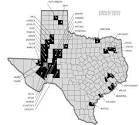
Direct rivalry for Permian Basin Royalty Trust (PBT) itself is low because the Trust is structured as a static, passive investment vehicle. It does not engage in operations, exploration, or acquisition of new assets; its revenue stream is entirely dependent on the production from its existing, fixed overriding royalty interests carved out from the Waddell Ranch properties and other Texas Royalty properties. This pass-through nature means it doesn't compete for market share in the traditional sense.
Competition, however, is present when you look at the universe of similar royalty trusts. Investors seeking yield and exposure to the Permian Basin often compare PBT against peers like Sabine Royalty Trust (SBR) and Cross Timbers Royalty Trust (CRT). These trusts compete for investor capital based on yield, historical performance, and asset quality. For instance, looking at year-to-date performance, Sabine Royalty Trust achieved a 28.26% return, significantly outpacing Cross Timbers Royalty Trust's -5.43% return in the same period, illustrating the variance in performance among these passive vehicles.
The more intense rivalry exists one level down, among the underlying asset operators-the companies actually drilling and extracting the hydrocarbons. This rivalry directly impacts Permian Basin Royalty Trust's revenue stream because the Trust's income is a function of production volumes and realized prices, which are dictated by the operators' capital allocation and drilling decisions. When operators face lower margins, they may slow development, directly reducing the Trust's cash flow. The Trust's nine-month 2025 revenue of $13.45 million reflects this small, fixed-asset scale, which is highly sensitive to these external operational dynamics.
The operational pressure on revenue is evident in the Waddell Ranch properties. For the month of September 2025, the Trust received no contribution from these properties because total production costs exceeded gross proceeds, resulting in a continuing excess cost position. This contrasts sharply with the Texas Royalty Properties, which generated revenues of $1,124,318 for September 2025.
Governance rivalry is currently high, representing a significant internal competitive dynamic. Activist unitholder SoftVest Advisors, LLC, along with other holders owning more than 15% of the outstanding Units, has forced the Trustee to call a Special Meeting for December 16, 2025. The core of this rivalry is a proposal to effect the judicial reformation of the Trust Indenture. The goal is to lower the threshold required for future amendments to a simple majority of Units cast when a quorum is present.
The current distribution environment underscores the urgency of this governance challenge. The distribution declared in November 2025 was only $0.019233 per unit, a steep drop from the $0.115493 per unit declared for September 2025. This reduced payout, totaling $896,437 for the 46,608,796 units outstanding in the November declaration, fuels the desire for governance change among unitholders.
Here's a quick comparison of the competitive landscape among the royalty trusts:
| Metric | Permian Basin Royalty Trust (PBT) | Sabine Royalty Trust (SBR) | Cross Timbers Royalty Trust (CRT) |
|---|---|---|---|
| Nine-Month 2025 Revenue | $13.45 million | Data Not Found | Data Not Found |
| Governance Event (Late 2025) | Special Meeting on December 16, 2025 to reform Indenture | Data Not Found | Data Not Found |
| Activist Ownership Threshold | Over 15% requested meeting | Data Not Found | Data Not Found |
| Recent Distribution Per Unit (Approx.) | $0.019233 (Nov 2025 Declared) | Data Not Found | Data Not Found |
| YTD Return (as of late 2025) | Data Not Found | 28.26% | -5.43% |
The key factors driving the rivalry affecting Permian Basin Royalty Trust's cash flow are:
- Operator decisions on the Waddell Ranch properties.
- The continuing excess cost position on Waddell Ranch assets.
- Price realized for oil and gas from Texas Royalty Properties.
- The outcome of the December 16, 2025 governance vote.
- The $0.115493 per unit distribution in October 2025 versus the $0.019233 per unit in December 2025.
To be fair, the Trust's static nature insulates it from operational rivalry but exposes it fully to commodity price risk and operator efficiency. Finance: draft analysis of the potential impact of Indenture reformation on Unit holder cash flow by next Tuesday.
Permian Basin Royalty Trust (PBT) - Porter's Five Forces: Threat of substitutes
You're looking at the long-term viability of a royalty trust tied to hydrocarbon production, so understanding what could replace that production is key. The threat of substitutes for the oil and gas Permian Basin Royalty Trust (PBT) is substantial over the long haul, driven almost entirely by the accelerating global energy transition.
The substitution risk is definitely tied to government policy and the speed at which the global energy system shifts away from fossil fuels. While PBT's cash flow relies on the production volumes and prices of oil and gas from its underlying properties, the power generation sector-a major consumer of natural gas-is rapidly adopting alternatives. For instance, in 2024, natural gas and renewables provided two thirds (67%) of U.S. power, up from 47% a decade prior.
The numbers from 2025 clearly show solar energy is outpacing natural gas in terms of new capacity additions. In 2024, solar accounted for 61% of new capacity additions. For 2025, the U.S. is set to add 64 GW of new utility-scale capacity, with solar alone projected to add 33 GW. Contrast that with natural gas, which EIA preliminarily estimated would only add 4.4 GW of new capacity in 2025. This suggests that while gas is still the largest source, its growth engine is slowing relative to renewables.
Here's a quick look at how the power generation sources stacked up in early 2025:
| Energy Source | Share of Total US Electrical Generating Capacity (Mid-2025 Est.) | New Capacity Additions (2025 Projected) |
|---|---|---|
| Renewables (Total) | 30.0% | ~40 GW (Solar + Wind) |
| Natural Gas | Largest Source (43% in 2024) | 4.4 GW (Projected Addition) |
| Solar (Utility-Scale) | 9.0% (Utility-Scale, June 2024) | 32.5 GW (Projected Addition) |
| Coal | 15% (2024) | Projected to rise by 6% in 2025 |
Natural gas faces direct competition from coal in the power generation sector, too, though this is often temporary. Higher natural gas prices, averaging $3.11/MMBtu in May 2025 (up from $2.19/MMBtu in 2024), made coal more competitive, causing coal-fired generation to increase by 90 GWh/day in May 2025 to offset a decline in gas generation. The EIA forecasts a 3% reduction in electricity generation from natural gas for the full year 2025. Still, PBT's primary revenue is tied to crude oil, which has seen oil prices stabilizing near $80/barrel in Q1 2025, offering some near-term support despite the power sector's shift. PBT reported Q3 2025 revenue of $7.3 million and a profit of $6.9 million.
However, the immediate impact of substitution is slowed by high switching costs for large-scale energy infrastructure. You can't just flip a switch and replace a power plant or a refinery. The Permian Basin itself is seeing infrastructure expansion, with projects like the Cactus II and Gray Oak pipelines unlocking access to Gulf Coast export terminals, which helps Permian crude command global prices. This need for massive, long-lead-time capital projects-like building new LNG facilities or utility-scale solar farms-creates a lag between the desire to substitute and the ability to do so across the entire energy system. If onboarding new infrastructure takes 14+ months, the immediate substitution pressure on PBT's royalty revenue is dampened.
- Solar's share of new US capacity in H1 2024 was 77%.
- Natural gas generation is forecast to decline by 3% in 2025.
- PBT's TTM earnings ending September 30, 2025, were $15.3 million.
- The Trust holds a 75% net overriding royalty interest in the Waddell Ranch properties.
Permian Basin Royalty Trust (PBT) - Porter's Five Forces: Threat of new entrants
For Permian Basin Royalty Trust (PBT), the threat of new entrants establishing a comparable royalty trust is exceptionally low. This is fundamentally due to the structure of a royalty trust itself, which is designed to hold static assets and distribute cash flow, not to expand its asset base. Unlike an operating exploration and production (E&P) company, PBT cannot take on debt-reporting $0.00 in total debt as of the most recent 2025 quarter-to fund acquisitions of new mineral or royalty interests. The Trust has no employees and functions purely as a pass-through vehicle, meaning any attempt to grow via acquisition would require a unit holder vote to sell the existing assets and terminate the Trust.
However, when looking at the threat of new oil and gas operators entering the Permian Basin to compete for the underlying production that feeds PBT's revenue, the barrier to entry is steep, effectively protecting the value of PBT's existing production streams. New entrants must commit colossal amounts of capital just to begin operations, which acts as a significant deterrent.
The capital expenditure required by established operators gives you a clear picture of the scale of investment needed to compete for new acreage or production:
- Permian Resources set its estimated fiscal year 2025 cash capital expenditure budget between $1.9 billion and $2.1 billion.
- Another operator revised its 2025 cash capex range to $1.9 - $2.0 billion.
- The cost to drill and complete a well in the core Delaware or Midland Basins generally falls between $9 million to $10 million per well.
- For a single operator in Q1 2025, drilling and completion costs were reported at approximately $750 per lateral foot.
To illustrate the fixed cost environment for infrastructure, which a new entrant would also need to secure access to, consider these recent major investments:
| Infrastructure Project/Cost Component | Associated Financial Number (2025/Near-Term) |
|---|---|
| Energy Transfer Hugh Brinson Pipeline Total Investment | $2.7 billion |
| KMI Gulf Coast Express Expansion Cost | $455 million |
| Permian Resources Q2 2025 Cash Capital Expenditures | $505 million |
| Permian Resources FY 2025 Capex Budget (Mid-point) | Approximately $2.0 billion |
New entrants must also navigate a complex and increasingly costly regulatory landscape. The compliance burden disproportionately affects smaller players who lack the scale to absorb these fixed overheads. For instance, the EPA's methane regulations introduced financial pressures through a specific charge:
- The "waste emissions charge" for methane was set at $900 per metric ton of methane emissions in 2024, with expectations for that amount to increase in coming years.
- These rules mandate increased leak detection and stricter flaring/monitoring, adding 'significant costs associated with monitoring'.
Acquiring comparable, unburdened royalty interests is difficult because the best, most developed acreage is already held by large, well-capitalized E&Ps or is locked up in existing structures like PBT. PBT itself holds a 75% net overriding royalty interest (NORI) on its largest asset, the Waddell Ranch, and a 95% NORI on its other Texas properties. These high-percentage interests are rare and highly sought after, making their standalone acquisition prohibitively expensive for a new, smaller entity trying to enter the market.
Disclaimer
All information, articles, and product details provided on this website are for general informational and educational purposes only. We do not claim any ownership over, nor do we intend to infringe upon, any trademarks, copyrights, logos, brand names, or other intellectual property mentioned or depicted on this site. Such intellectual property remains the property of its respective owners, and any references here are made solely for identification or informational purposes, without implying any affiliation, endorsement, or partnership.
We make no representations or warranties, express or implied, regarding the accuracy, completeness, or suitability of any content or products presented. Nothing on this website should be construed as legal, tax, investment, financial, medical, or other professional advice. In addition, no part of this site—including articles or product references—constitutes a solicitation, recommendation, endorsement, advertisement, or offer to buy or sell any securities, franchises, or other financial instruments, particularly in jurisdictions where such activity would be unlawful.
All content is of a general nature and may not address the specific circumstances of any individual or entity. It is not a substitute for professional advice or services. Any actions you take based on the information provided here are strictly at your own risk. You accept full responsibility for any decisions or outcomes arising from your use of this website and agree to release us from any liability in connection with your use of, or reliance upon, the content or products found herein.